
Pool Builders of Asheville: Inground Pool Installation in Precast Concrete, Fiberglass and Gunite
Pool and Backyard Design and Construction in Asheville, NC. Most Precast and Fiberglass Pools Built in 4 to 12 Weeks
We design and build inground pools across Asheville and Western North Carolina, and every project starts with the backyard rather than with the pool. Where the water sits, what you look out at from it and where the afternoon sun falls all get worked out with you first. So does how you want to be using the space on an evening in September.
Precast concrete is the quickest pool to put in the ground here. The shell is cast in a factory and can arrive as little as four weeks after it is ordered, so the only work happening in your yard is the ground work. On a sloped lot it does something no other pool does: the structure holds back the ground behind it, which can take a separate retaining wall out of the budget.
Precast concrete, fiberglass and gunite each suit a different property, so we design the backyard first and choose the pool that fits it. One company builds all of it, the pool, the decking, the lighting and the planting, on one contract and one schedule. We are licensed and insured, and we handle the permitting from application through final inspection.
Pool designs for mountain properties
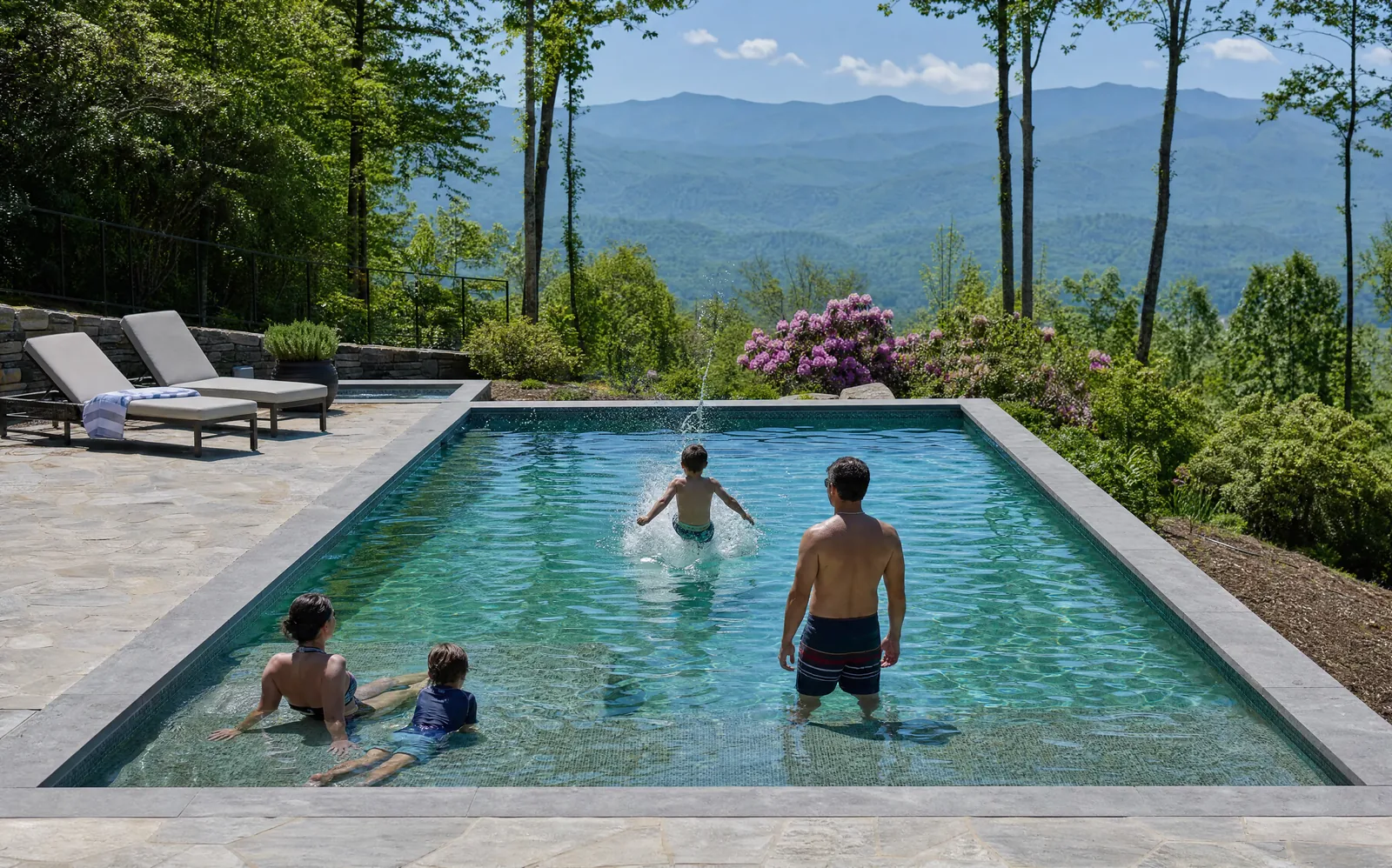
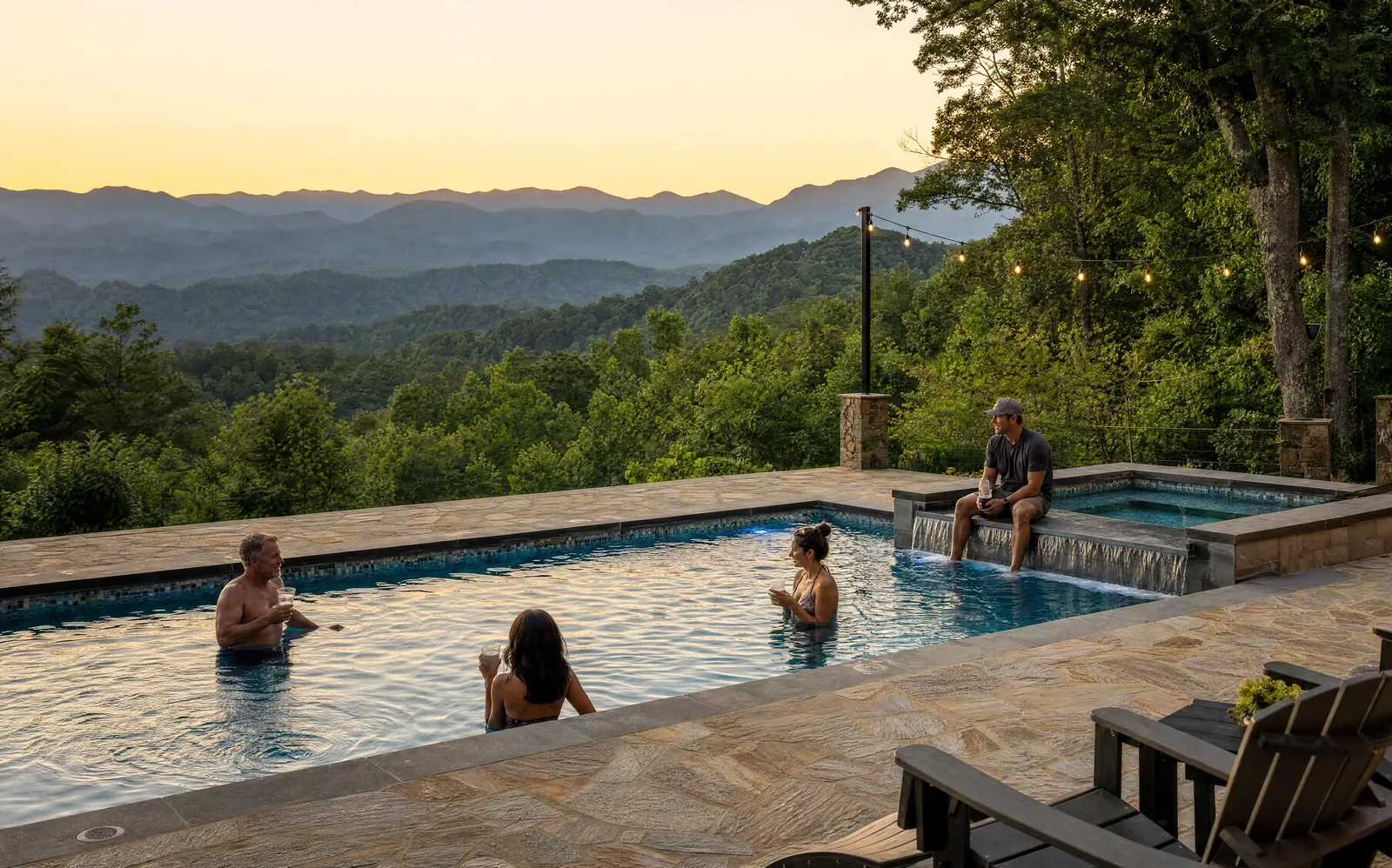
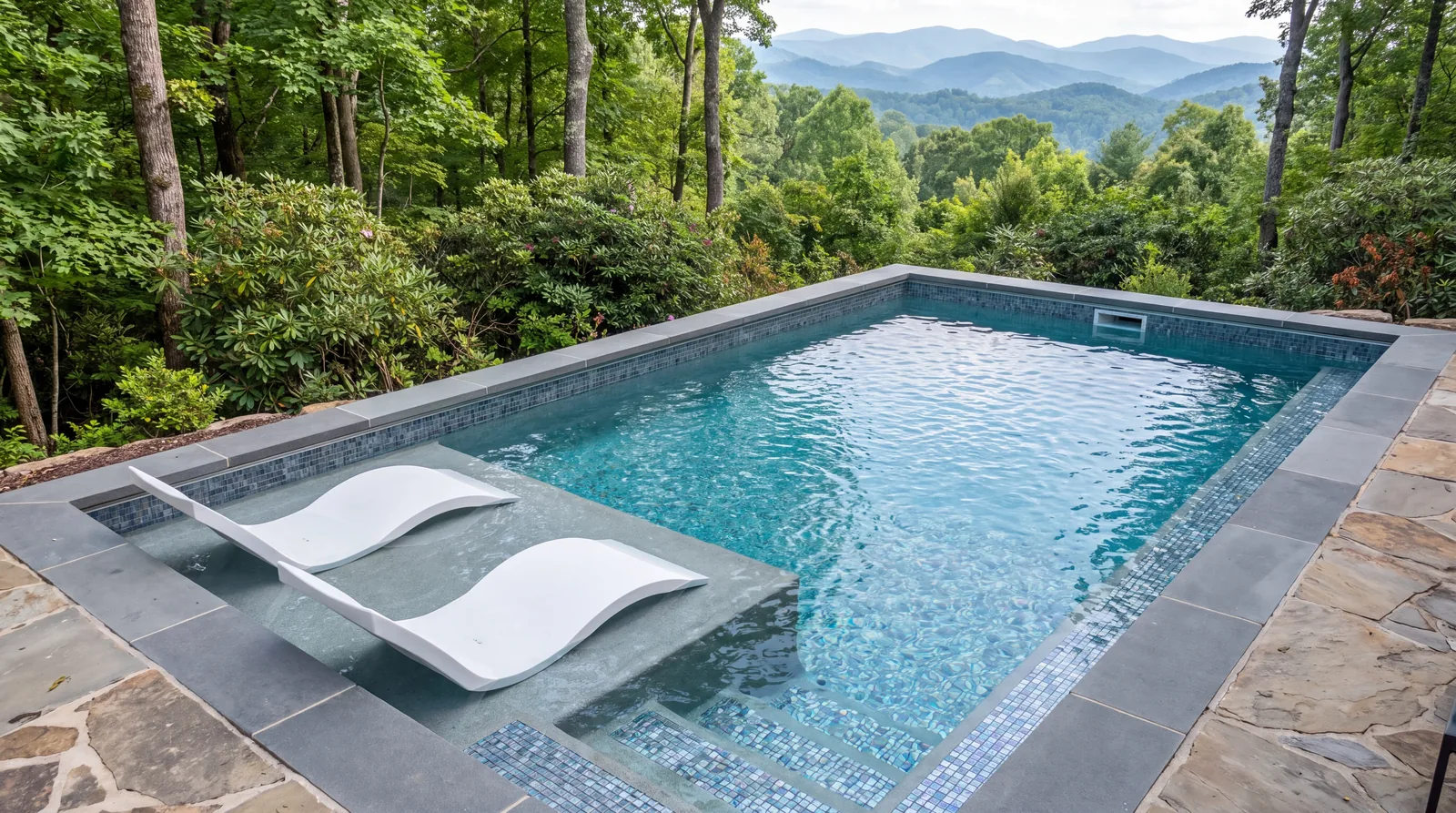
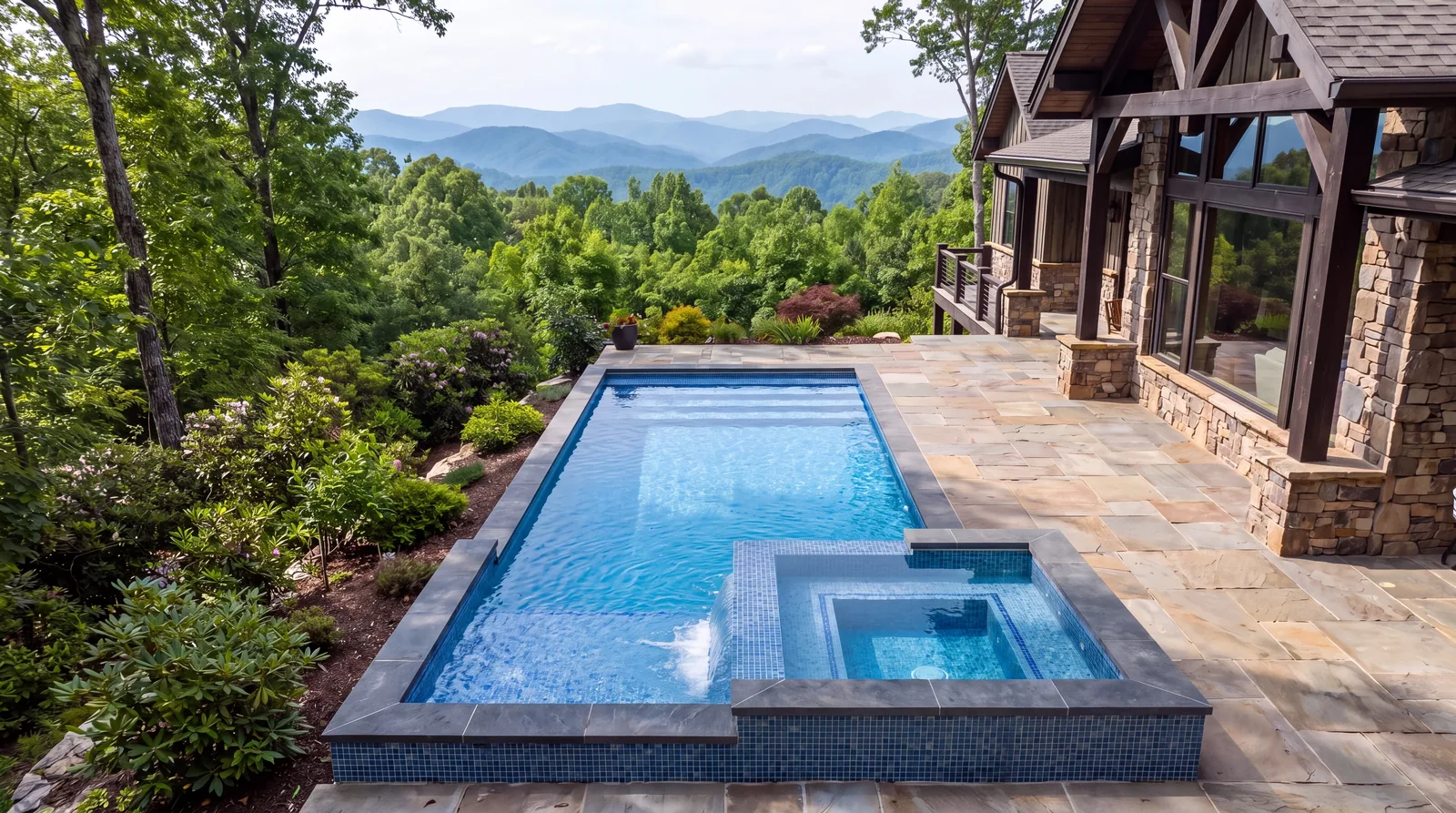
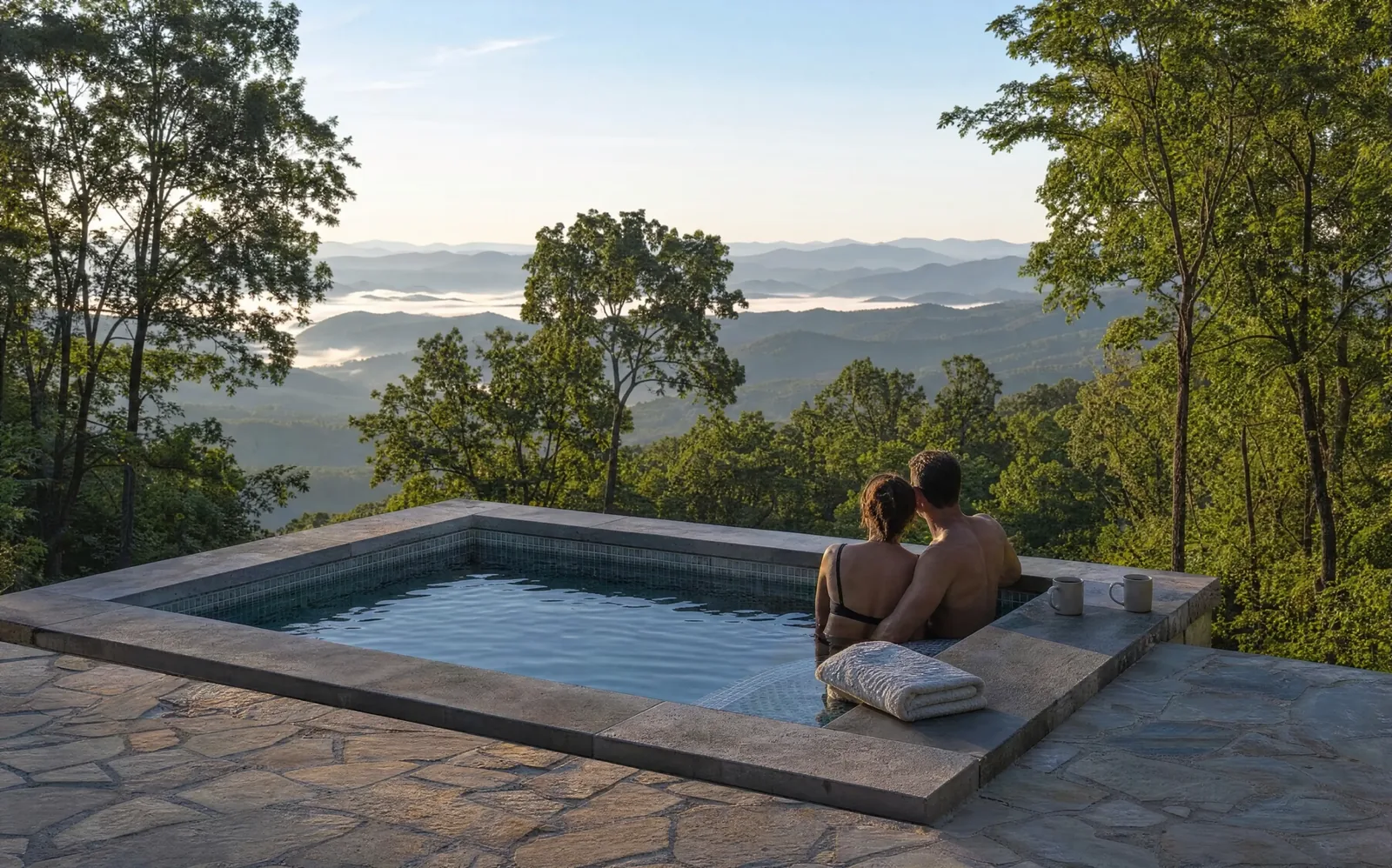
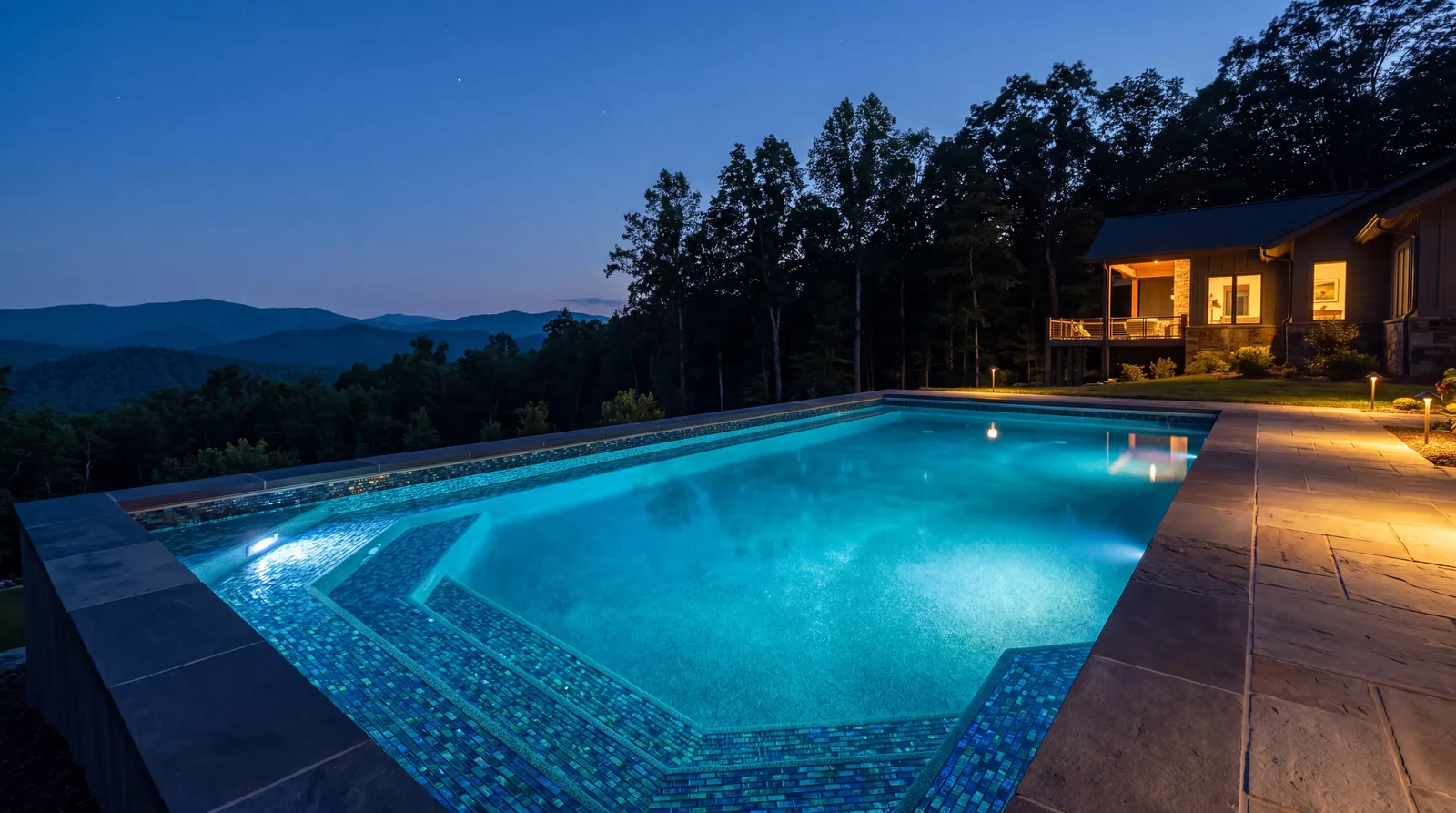
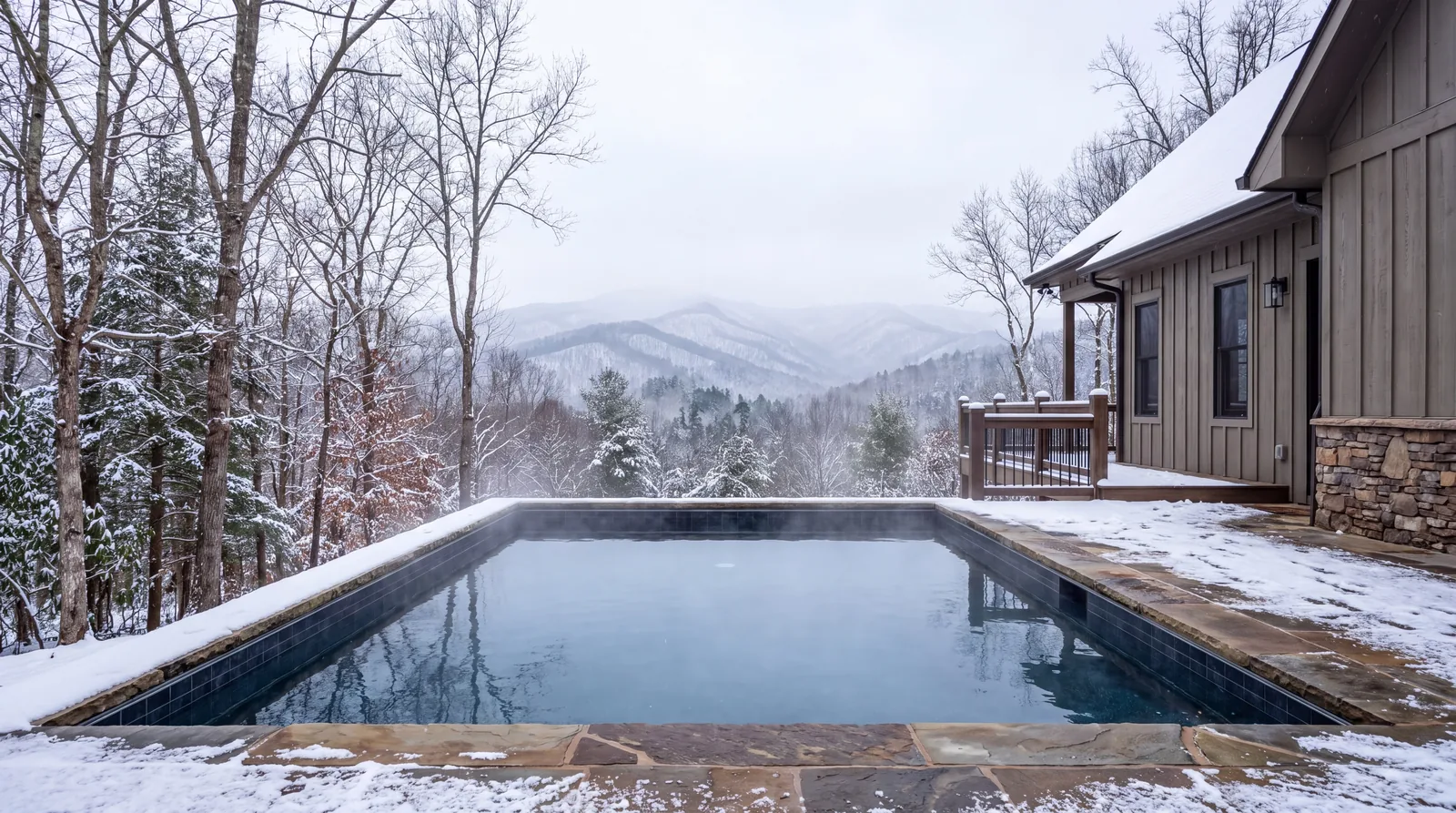
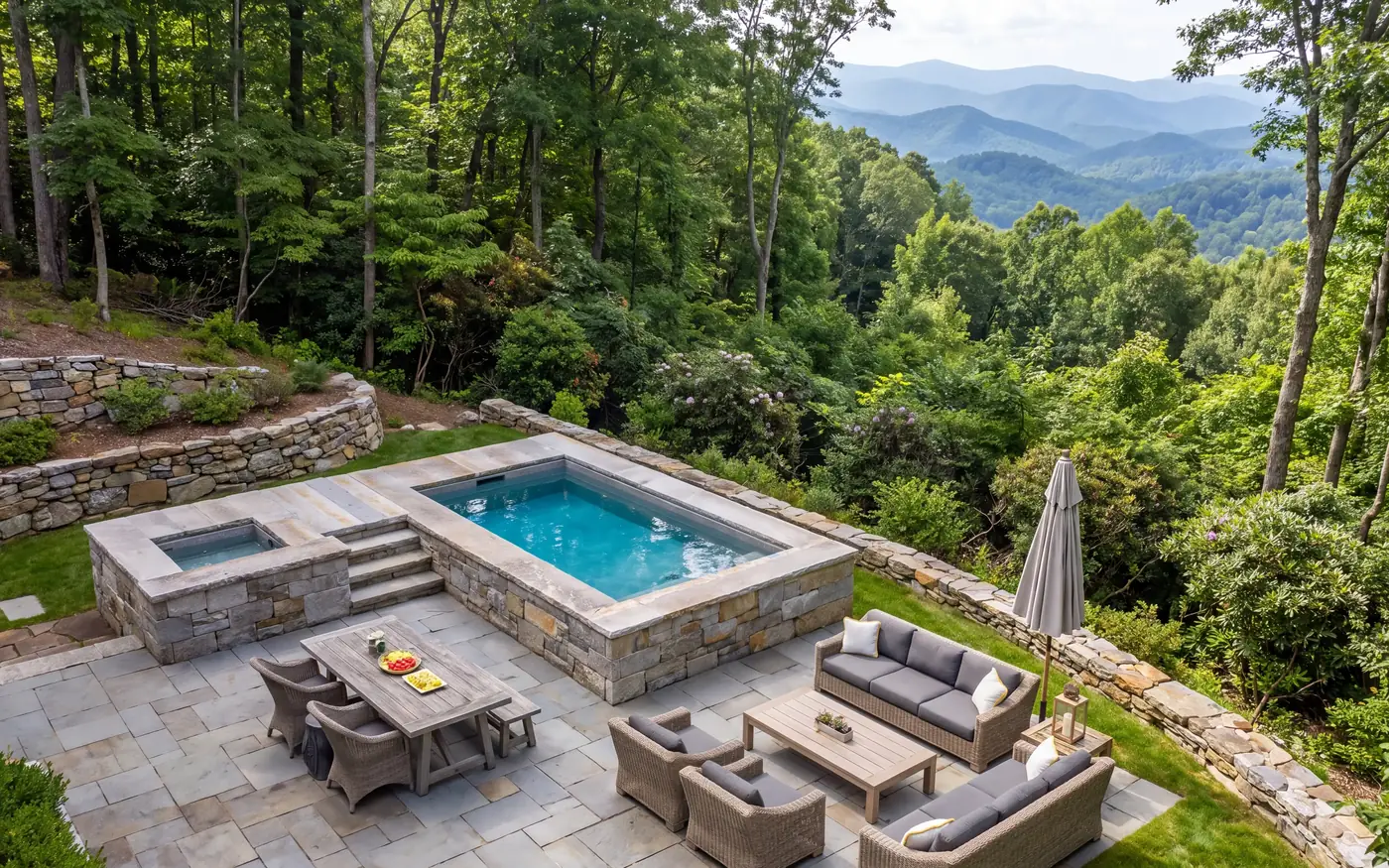
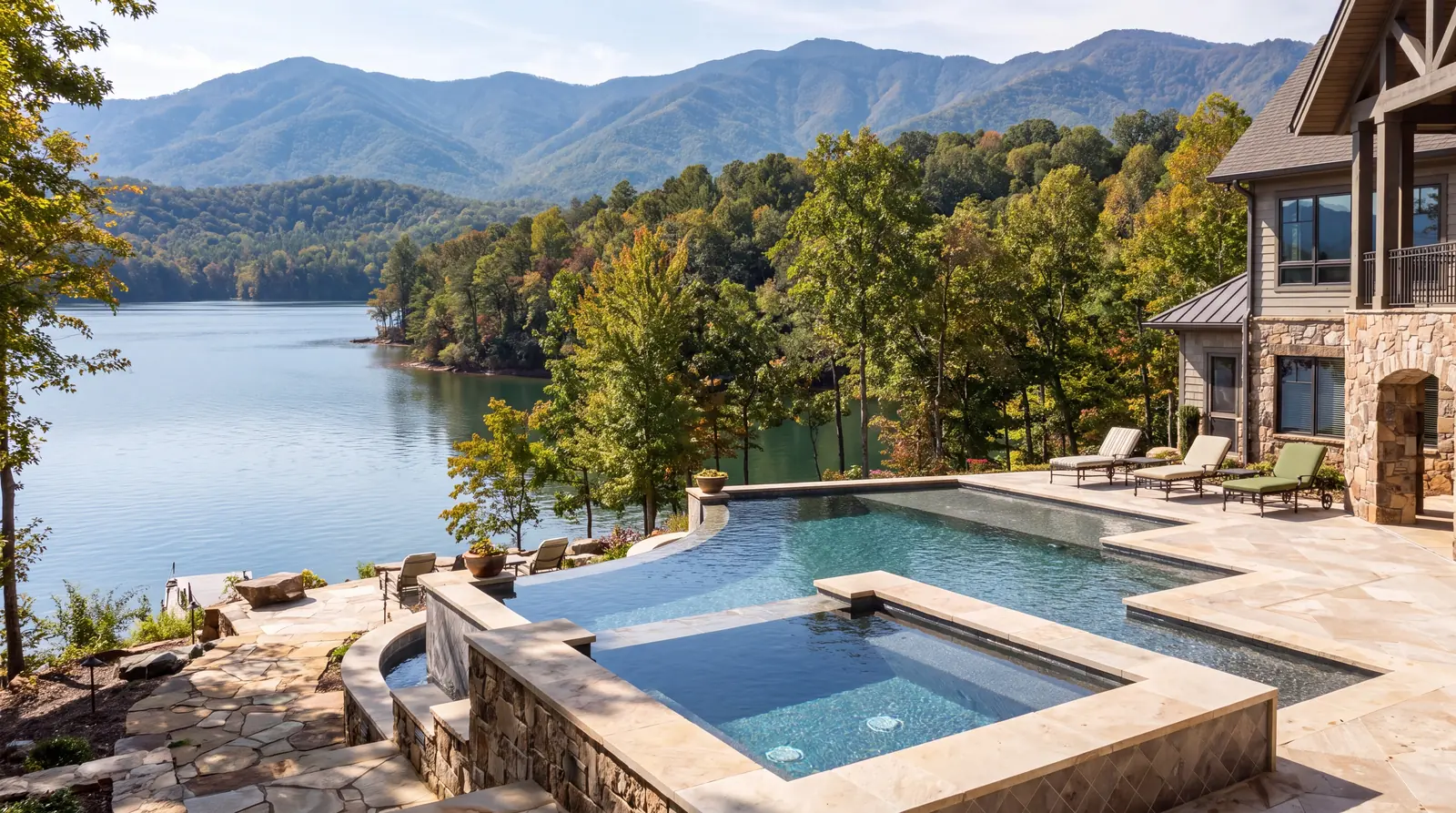
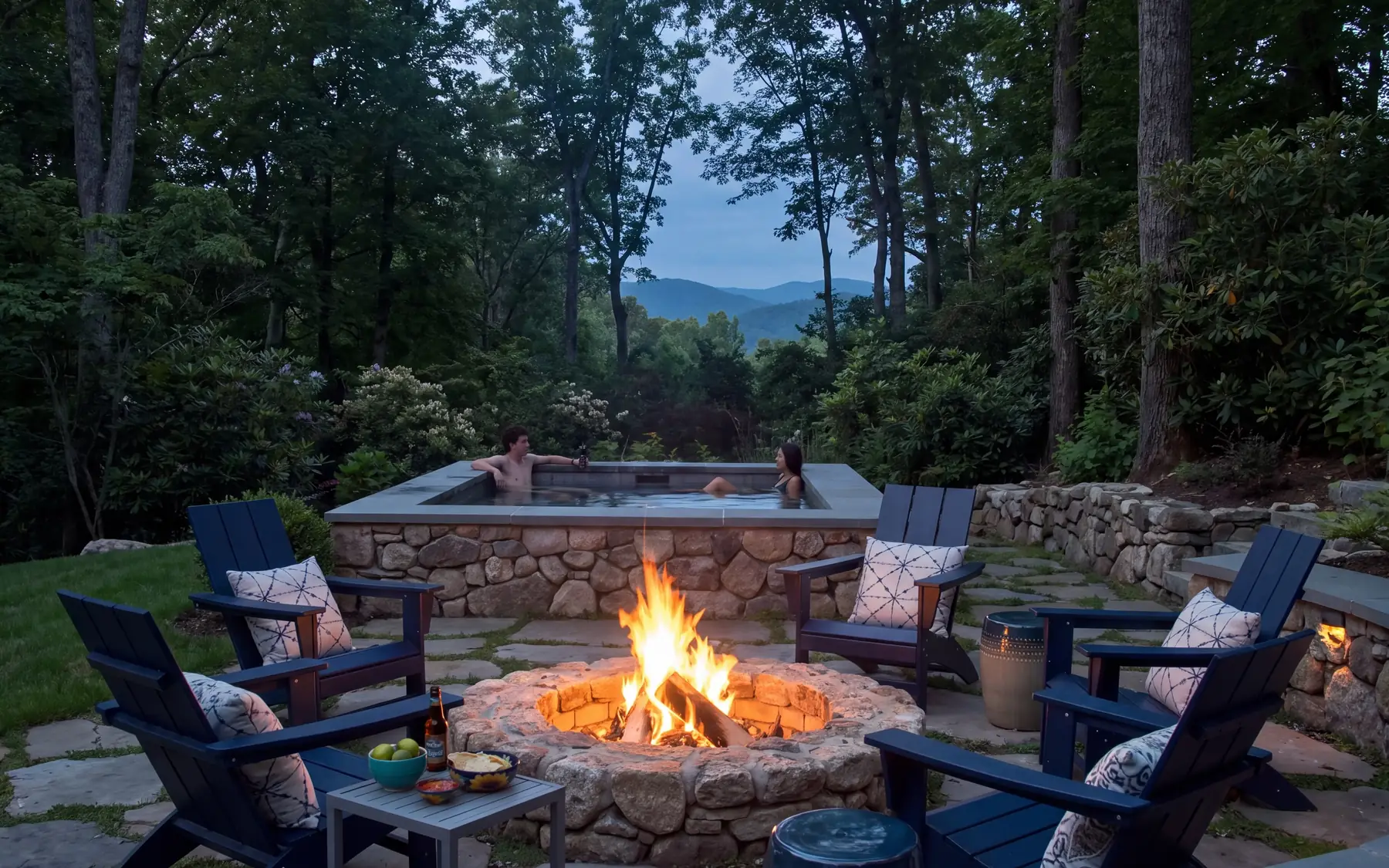
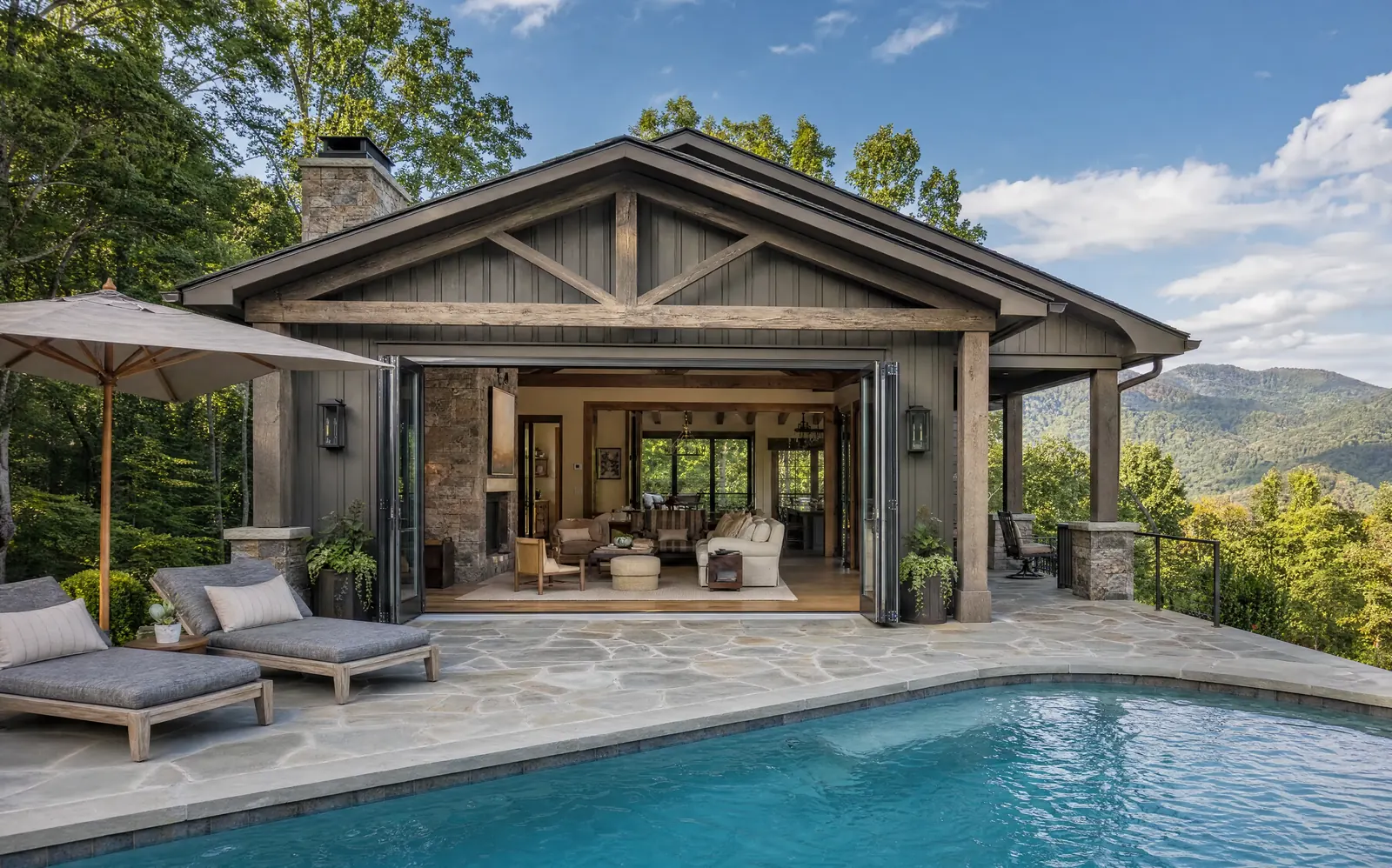
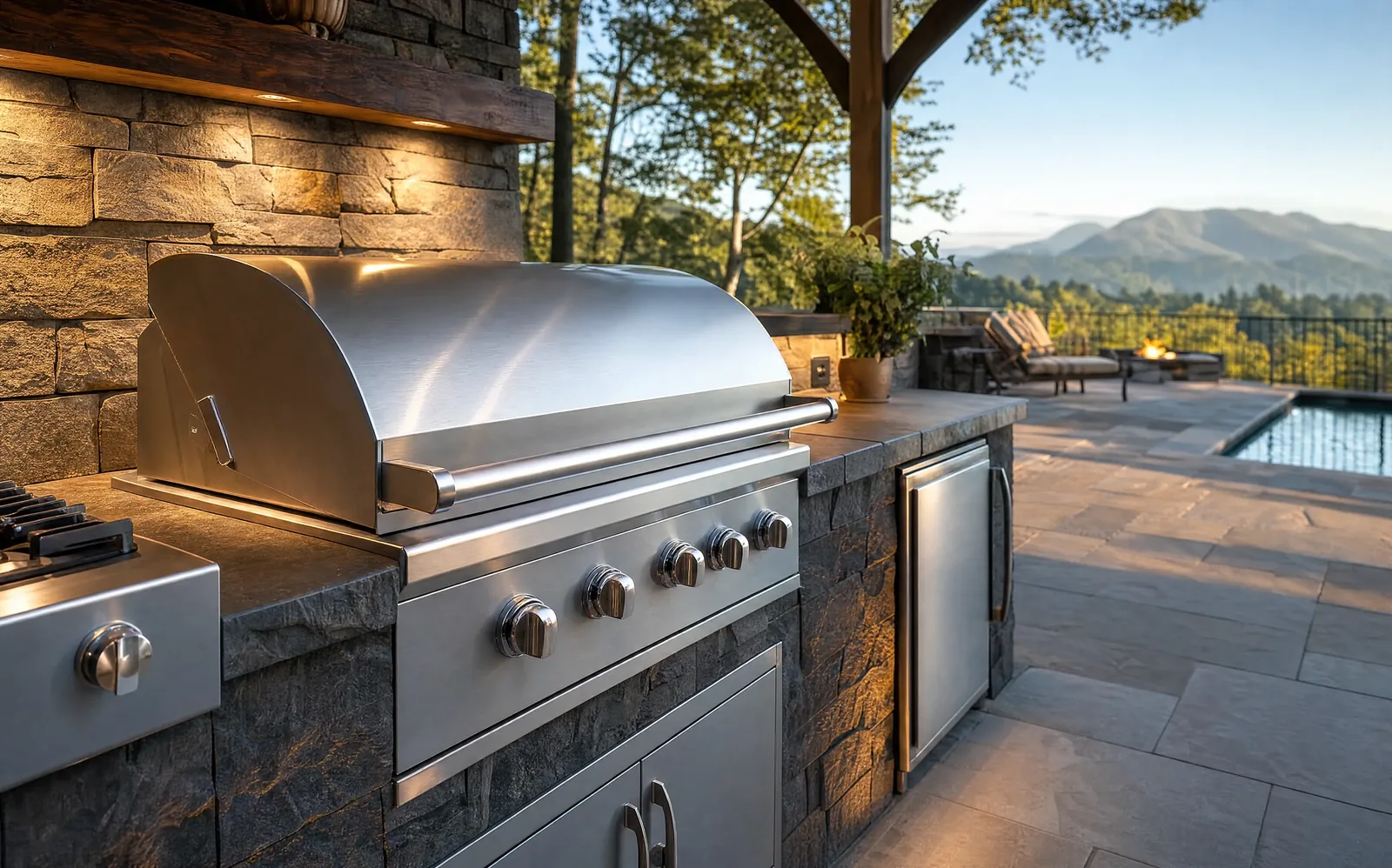
Designs and finishes we can build. Swipe to see more.
Why Choose Pool Builders of Asheville?
- Most precast and fiberglass pools finished in 4 to 12 weeks. A pool formed and cured in your yard takes months. A shell that arrives already built means the only work on your property is the ground work, and your backyard goes back to being a backyard far sooner.
- Three kinds of inground pool, and the choice is where your money is saved. Precast concrete for speed and for holding back a slope, fiberglass for a molded shape that arrives finished, gunite when the design has to be drawn rather than chosen. Most of what makes a mountain pool expensive is earth: cutting deeper than the design needed, building more retaining than the slope required, and trucking dirt in or hauling it off. We measure your slope, what sits underneath and how equipment reaches the yard before we recommend anything, because the right shell in the right spot can cut the amount of earth that has to move down to almost nothing. You still end up with the placement you want. You just pay for less of it in dump trucks.
- We tell you what the land is telling us, before the deposit. If the flat corner you had in mind is the one that collects every drop of runoff, we say so at the site visit. If the view you are paying for disappears once the pool sits three feet lower, you hear that then as well, and we find the better spot together.
- One company for the whole backyard. Plenty of pool contractors are installers who subcontract everything around the water. The site work, the retaining, the pool, the decking, the lighting and the planting run on one contract and one schedule, instead of five trades for you to line up yourself.
- Licensed and insured since 2019, with the permits handled end to end. We carry a North Carolina general contractor license, number L.82093, and full insurance on every project we take on. The application, the scheduling and every inspection across Buncombe, Henderson, Madison counties are ours, so you never file a document or chase an inspector.
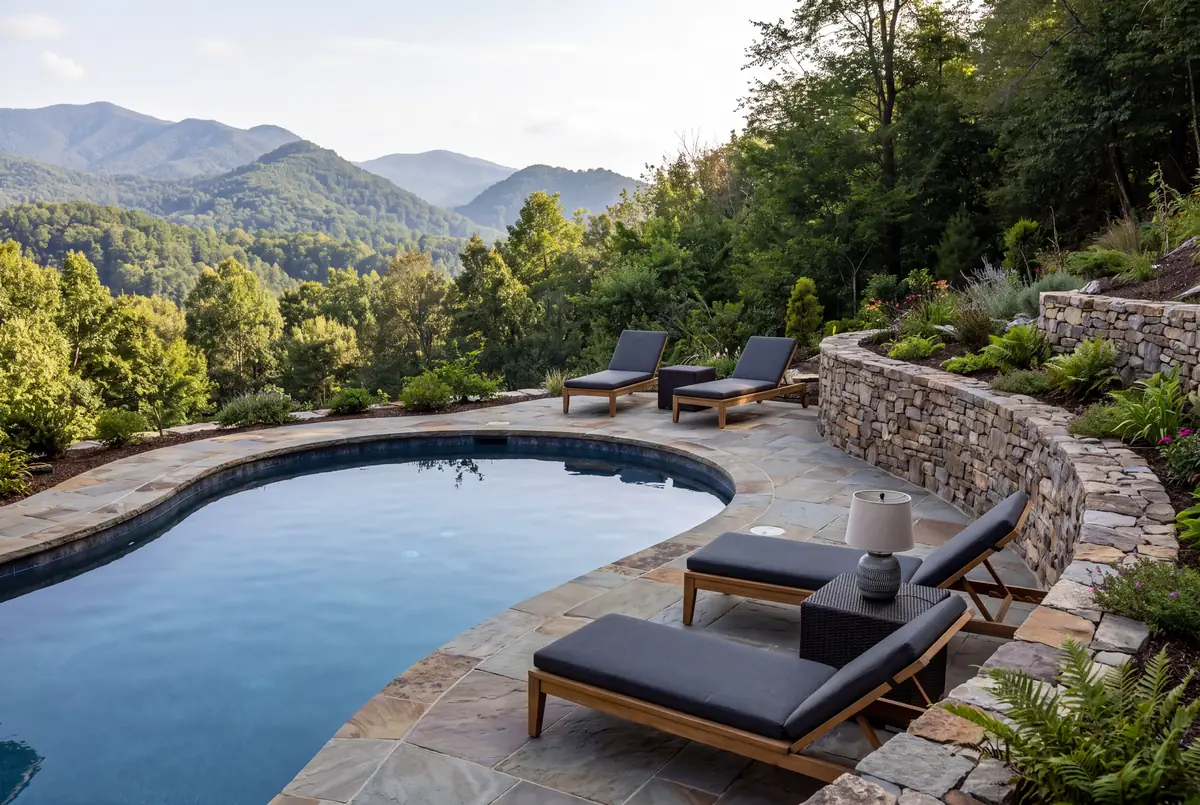
Pool Installation Services in Asheville, NC
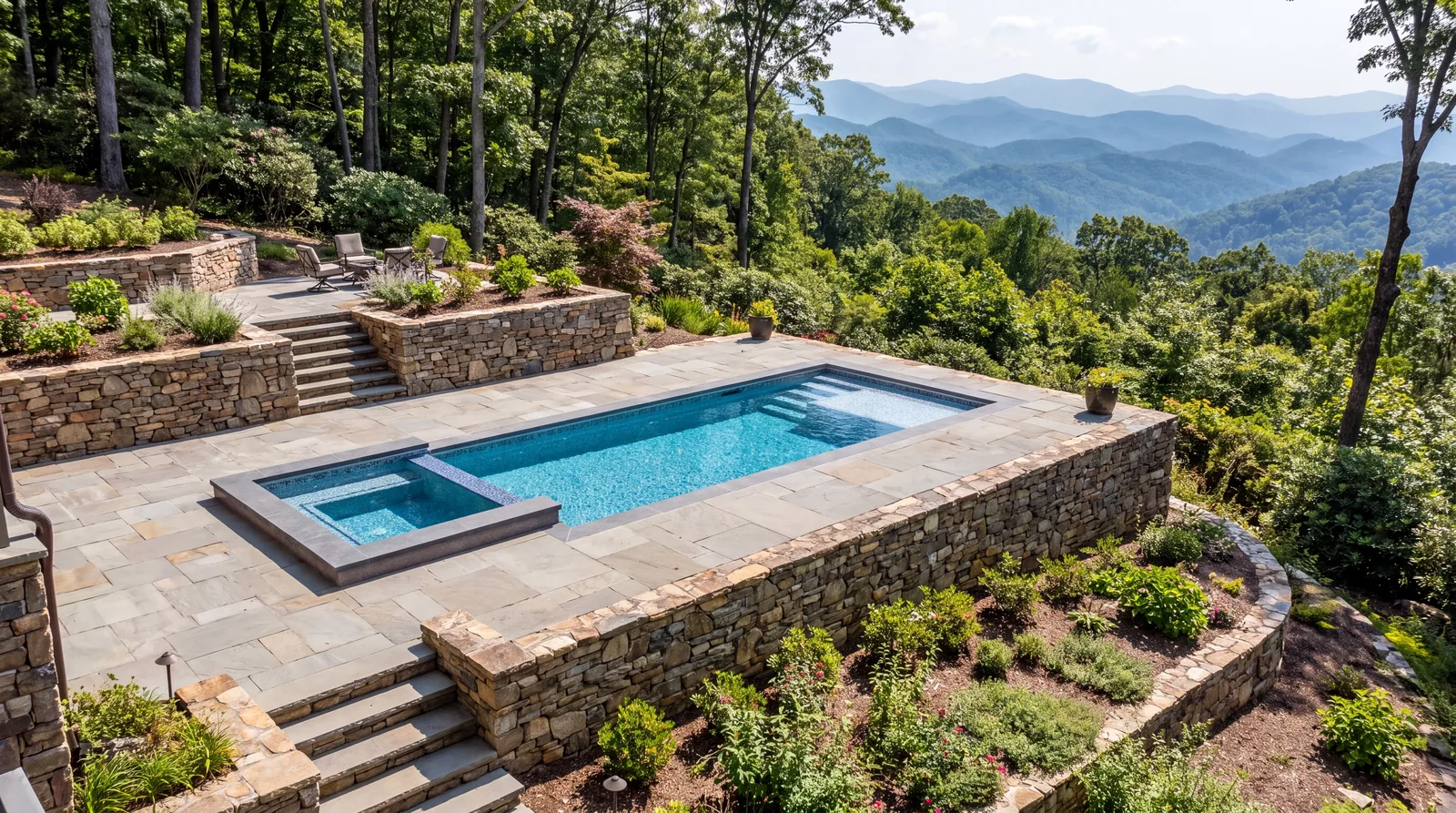
Precast Concrete Pools
Precast concrete is the pool type most people have never heard of, and the name undersells it badly. A precast pool is a full inground concrete pool, the same material as gunite, cast and cured in a factory instead of sprayed into a hole in your yard. Building it under cover, where the mix is measured rather than judged by eye, is why the concrete comes out stronger than concrete placed on site.
The finished shell arrives on a truck and is set into the ground by crane. Nothing has to be formed or cured in your yard, so the weeks on your property go to the dig, the base and the surround rather than to building the pool itself.
On a slope the shell does a second job. Set against a cut, the structure holds back the ground behind it, so a wall you would otherwise build and pay for separately can come out of the design. Holding the ground with the pool also keeps dirt on your property instead of on a truck, and hauling is a cost line most people never see coming. On sloped ground that makes precast the least expensive pool we install to prepare for, even though the shell itself is not the cheapest to buy. On a flat lot the advantage largely disappears, because there is nothing much to hold back.
A finished precast pool does not read as a box. Tile runs at the waterline, a ledge sits just under the surface wide enough for a lounger, a spa can spill into the main body, and the coping and surround tie the whole thing into the patio.
Everything built in has to be chosen before the shell is cast, which is the trade you make for the speed. The tanning ledge, the spa, the depth, the tile, the lighting, swim jets and the sanitizing system all get specified up front. Gunite is the pool with no limits at all, and it is the one to look at if you want a shape or a depth that nothing is molded in.
Sizes run from around 7 feet by 7 up to roughly 12 feet by 26, and the narrow shells reach properties that a full size pool cannot. Most precast projects run 4 to 12 weeks from start to swimming, which is the shortest disruption of any pool we install.
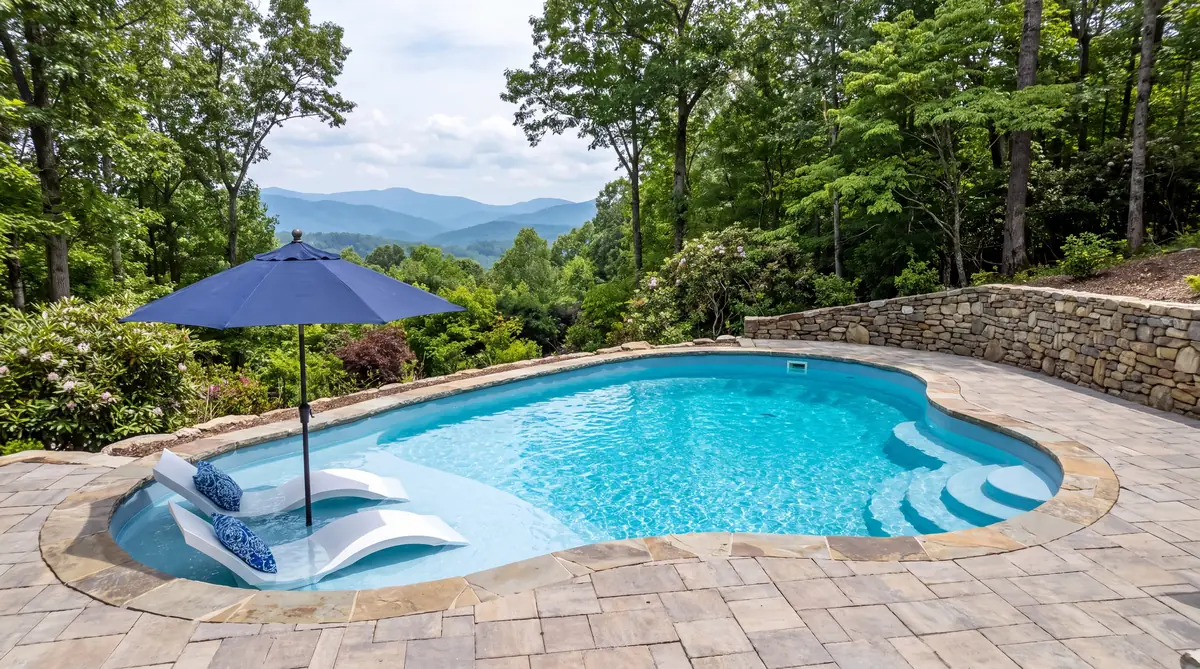
Fiberglass Pools
A one piece molded shell, craned into place like a precast pool, with a smooth non porous surface that resists algae and needs less chemical over its life. The tanning ledges, the bench seating and the curved entry steps are formed into the shell instead of built afterward.
Widths run from around 8 feet up to 16 feet, lengths reach roughly 40 feet, and depths run from a little under 5 feet to around 8 feet on the deepest models. The shape, the size and the depth all come from the manufacturer's range and cannot be drawn to fit, which is the trade against gunite, and only a limited number of models are made at the narrow end.
Most fiberglass projects also run 4 to 12 weeks, for the same reason: the pool is built before it arrives. Access is the practical constraint here, because the shell arrives whole, on a truck, and has to physically reach the hole, so driveway width, gate openings, overhead power lines and mature trees decide whether it is an option before the design starts.
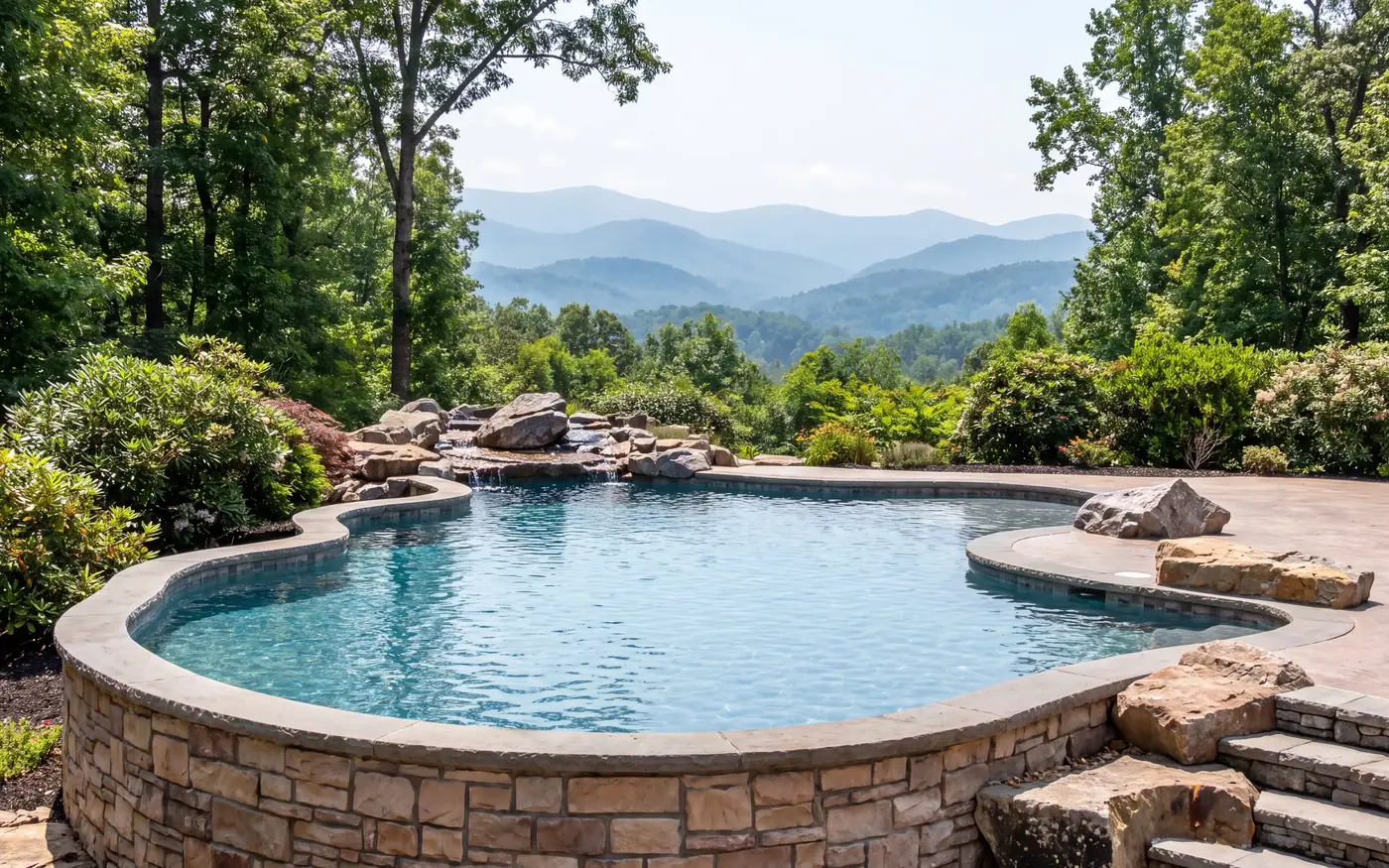
Gunite and Shotcrete Pools
Concrete sprayed and shaped in your yard, then finished in plaster, pebble or exposed aggregate. It is the only pool we install with no limit on shape, depth or configuration.
That makes it the answer when a pool has to be drawn around an awkward footprint, stepped into a hillside, or given a vanishing edge over a view, all of which come up more often on mountain property than they do elsewhere. It is also the longest build and the most weather dependent, because the structure is formed and cured on your property.
Nothing has to be delivered, so a gunite pool stays possible on properties that a crane cannot serve.
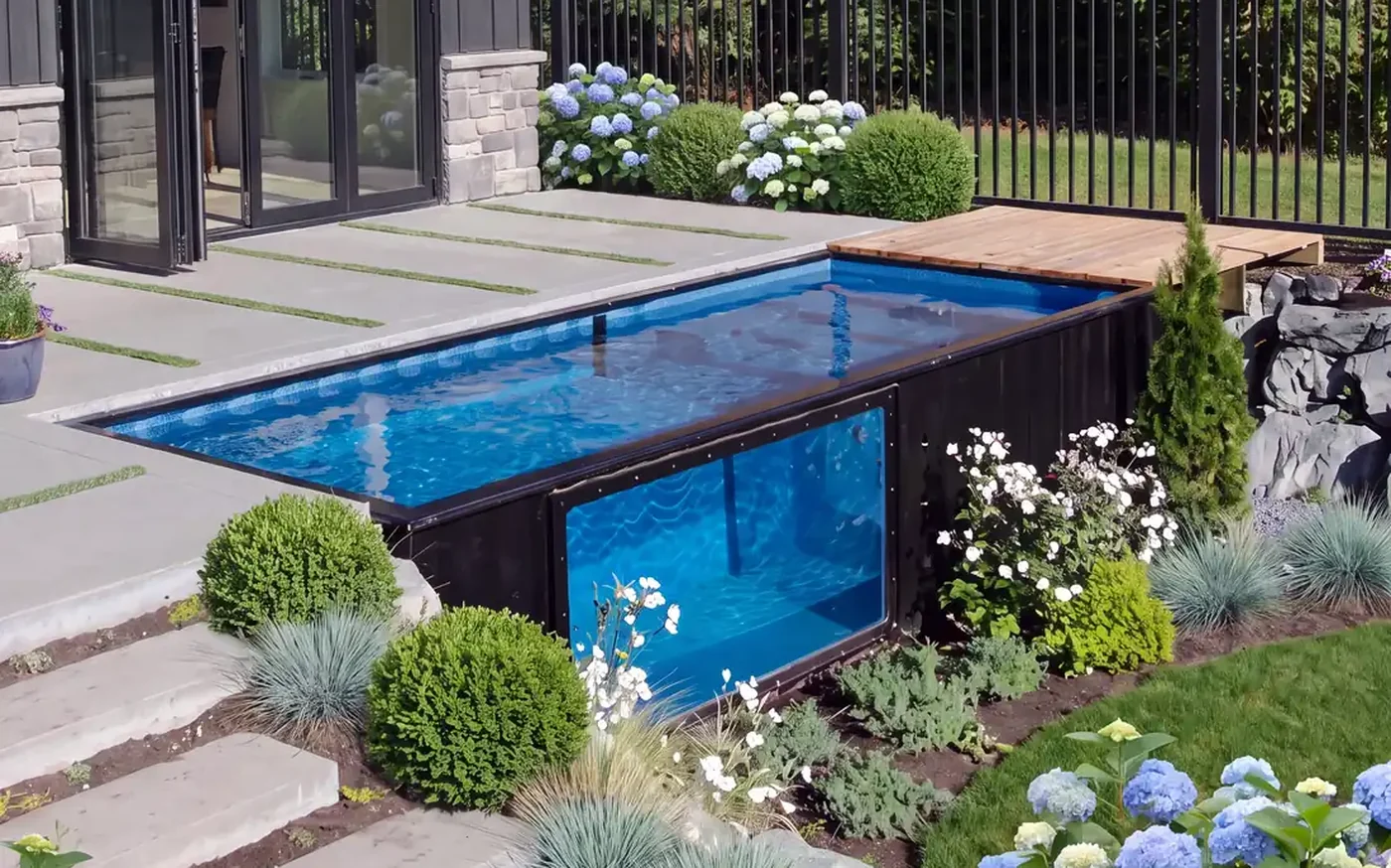
Shipping Container Pools
A steel shipping container converted into a pool and delivered largely complete, with the filtration and the plumbing already fitted. Compact, quick to install, and the lowest entry point of anything we install.
A container pool is not an inground pool. It sits above ground on a pad, or set into a slope so that one side is buried and the other stays open, which makes it practical on a steep property where a full dig would mean serious retaining work first. That flexibility, along with the speed, is why container pools have become popular on short term rental properties where the pool has to earn its keep.
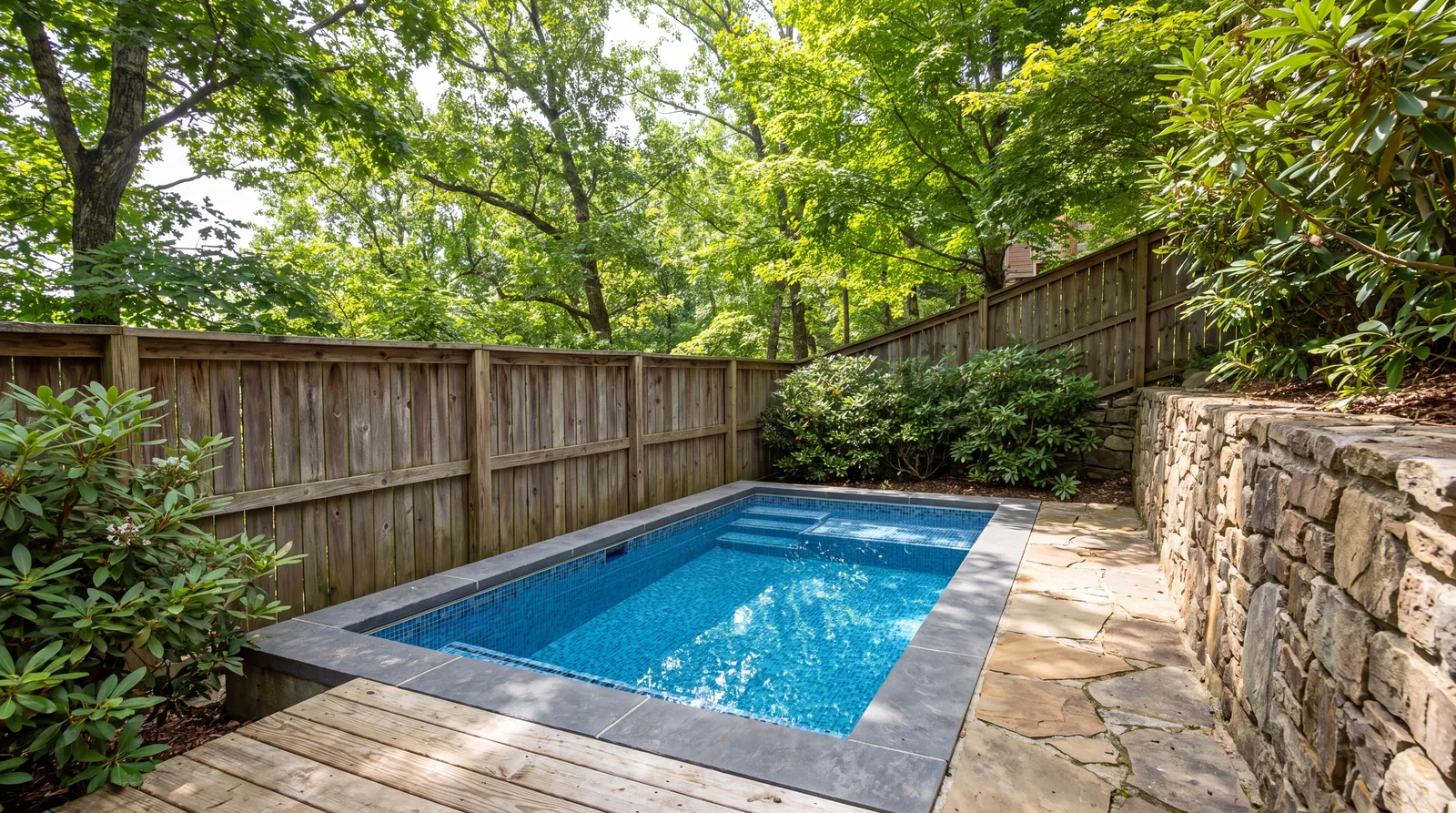
Plunge Pools, Cold Plunges, Hot Tubs and Saunas
Plenty of properties here are assumed to be too small or too steep for a pool, and often they are not. A plunge pool fits where a full size pool will not, and on a small lot it is frequently the better result: less deck, less water to heat, and more garden left over. Precast plunge shells start at around 7 feet by 7.
On sloped ground a plunge pool is often built raised rather than sunk, with stone or block cladding and a stone cap, which turns the retaining you needed anyway into the pool itself. Heated and covered, it is the one pool here that stays usable through most of the year.
We also install hot tubs, swim spas and saunas. That means the pad, the drainage, the trenching, the electrical work and the surround, prepared properly for the unit you have chosen. We install these units and do not sell them.
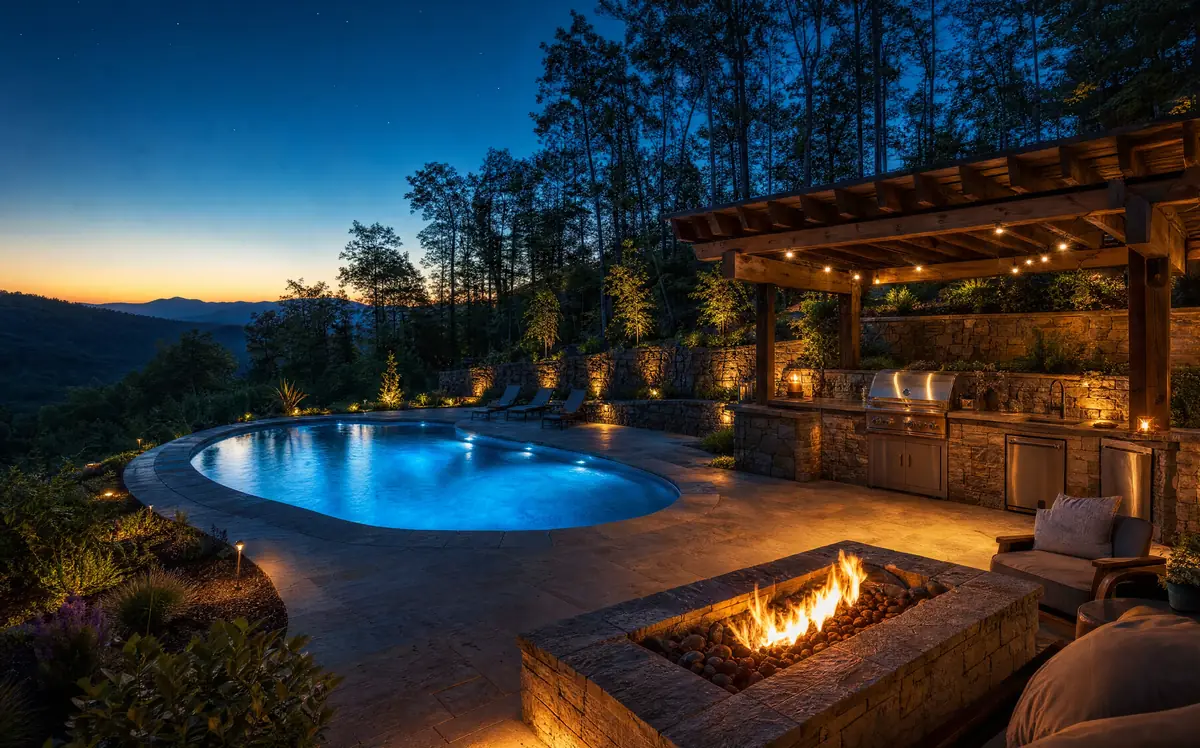
The Complete Backyard: Decks, Fire Features, Outdoor Kitchens and Lighting
The pool is the smaller half of the project. The deck, the edging, the steps and the level ground you stand on are what make a backyard usable, and on sloped property that space has to be built and not simply finished.
Decking comes in a broom finish, stamped concrete or exposed aggregate, with coping in poured concrete, pavers or stone. We build terracing where the slope needs stepping and retaining walls where it needs holding, and we lay the surround so that it sheds water away from the pool instead of into it.
Beyond the pool itself we build fire pits and fireplaces, built in grills and outdoor kitchens, pergolas and shade structures, low voltage lighting, privacy planting and fencing. Specified together, built on one schedule, and finished as one space.
Which Pool Is Right for Your Asheville Property?
Your ground answers most of this before you do. A steep lot can be benched and held with retaining, and precast concrete suits a benched cut particularly well because the shell arrives finished. A narrow drive rules out a 16 foot shell but not a precast one, which starts at around 7 feet wide. A small yard usually wants a plunge pool and a patio rather than a full pool and no room left over. A design that has to be drawn rather than chosen wants gunite, and gunite runs to months.
We work through all of that with you standing in the yard, because the answer changes with the slope, the access and what sits underneath.
How Much Does Pool Installation Cost in Asheville, NC?
Most pool companies will not answer this question. Here are real ranges, and more usefully, what moves you within them.
| Pool Type | Typical Price Range | What Moves the Price |
|---|---|---|
| Precast Concrete Pool | $65,000 to $150,000 | Site work, base preparation, crane reach, surround square footage |
| Fiberglass Pool | $60,000 to $150,000 | Shell size and model, delivery access, decking |
| Gunite Pool | $90,000 to $200,000 and up | Depth, shape, square footage, finish, weeks on site |
| Shipping Container Pool | $55,000 to $135,000 | Delivery access, site preparation, surround |
| Pool Decking and Surround | Priced per square foot | Finish type, square footage, steps and terracing |
What moves you within the range: how much your land slopes, what the ground underneath is made of, how the pool reaches the yard and which pool you choose. Beyond that it is how much decking goes around it and what that decking is made of. The lighting counts, along with the distance from the pool to your electrical service and whether that panel has capacity, and any retaining walls or drainage the slope requires.
The lowest figure in every range is a level site. Flat ground, easy access for the crane, and a modest surround. A level site is uncommon around here, because most property in these mountains sits on a slope, and how much grading and excavating your ground needs is the single biggest thing moving your number. The size of the pool moves it as well, and so does everything you put around the pool, including the decking, the patio, a shaded area, tile and rockwork. Two pools that look the same on paper can sit $60,000 apart because of what is underneath them and what is around them.
Surround material and lighting
Surround material and lighting are the two things people underestimate most often, and both are worth deciding early instead of at the end when the budget is already spoken for.
The surround. Your choice of surface material is the second half of the budget. Broom finish concrete is the baseline, because it is durable, quick and the least expensive per square foot. Stamped and exposed aggregate concrete step up from there. Natural stone and porcelain tile step up again, and on a large deck that difference compounds quickly, because you are paying it on every square foot. It is worth knowing that the material and the square footage are separate decisions. A smaller deck in stone often costs less and looks better than a sprawling one in plain concrete.
Lighting. Lighting is the other thing worth settling early. Pool lighting is the obvious half, meaning the LED fixtures set into the shell, which are cheap to run and change the pool completely after dark. The half people forget is everything else: path and step lighting, uplighting on retaining walls and trees, and lighting around a fire feature or an outdoor kitchen. On a mountain property where the sun drops behind the ridge early, that is the difference between a pool you use until nine and one you stop using at seven. Conduit is far cheaper to run before the decking goes down than after it.
Building a Pool in the Mountains: What Every Western North Carolina Homeowner Should Know
How Much Your Land Slopes Decides the Design Before Anything Else
Level ground is the uncommon case in this region. How far the yard drops across the pool area determines whether the pool is dug into the slope, built up on the low side, or set behind a retaining wall. That decision then drives the dig, the surround and the drainage that follow, which is why we measure your ground before quoting instead of afterward.
What Is Under Your Yard Is Not What Is Under Your Neighbor’s
Western North Carolina sits on ground that varies sharply over short distances. Planning the site work properly, and agreeing in writing how rock will be handled before work starts, means the answer already exists whatever the ground turns out to be.
Access Decides Which Pools Are Even Possible
A precast concrete or fiberglass shell arrives as a single object that has to reach the hole, usually by crane. Driveway width and steepness, gate openings, overhead power lines and mature trees are the real limit on a mountain property, more often than the budget is.
A Shorter Season Makes Heating a Design Decision
At this elevation the natural swimming season is meaningfully shorter than it is on lower ground, and the limit is water temperature and not air temperature. A heat pump or a gas heater, together with a cover that holds that heat in overnight, adds several weeks at both ends of the year. Heating is therefore designed in from the start, and the equipment pad is sized for it on the first day.
How Pool Builders of Asheville Builds Your Pool
Every pool we build starts with the same conversation, which is how you actually want to use the space. The design follows from that rather than from a catalog or from whichever pool we happen to prefer.
1. Phone Call and Project Scope
We start with what you want, where you are, and roughly what you have in mind. On that call we go through which types of pool are worth considering for your kind of property. We also cover roughly where a project like yours tends to land, so that nobody spends a site visit on a budget that was never going to work.
2. Site Visit and Assessment
We measure the slope of your land, the ground underneath it and the width of the access, rather than estimating any of them. We also note where your electrical panel sits and whether it has capacity, where water runs across the property, where the sun falls in the afternoon, and where the pool actually wants to go. The best spot is often not where people first picture it, and the reason usually becomes obvious once you are standing in the yard.
3. Designing Your Backyard
Design is the part that takes the longest and matters most, and it is the part we do together with you. We start with how you will really use the space, which covers who is swimming and how often you entertain. We also work out whether the pool should be the center of the yard or set apart from it, and whether it needs to work for small children now and teenagers later.
Everything around the pool is designed next, starting with where the deck goes and how much of it you need. What you see from the kitchen window and from the porch. Where the fire feature and the seating want to sit so that the space still works in October. What needs screening for privacy, and from which direction. How the whole thing is lit once the sun goes behind the ridge.
Materials are decided here as well, rather than later. Whether the surround is broom finish concrete, stamped concrete, stone or tile, and how much of it there is. Where the lighting goes and what it is picking out. Both change the number, and both are far cheaper to decide now than to revisit once the conduit is buried and the concrete is poured.
You will go back and forth with us on the layout until it is right on paper, because moving a pool on paper costs nothing and moving one after the excavator has been costs a great deal.
4. Pool Recommendation
Your property and your design decide the recommendation between them. If two types both work, you get the trade between them in plain terms rather than a push toward one. And if the design you have fallen for only works in gunite, we will talk that through with you, along with what it means for the budget and the schedule.
5. Detailed Quote and Permitting
You get a quote with the variables and any unknowns named instead of buried, so that you can see what is fixed and what depends on the ground, and we will walk you through it line by line. Once it is agreed, we handle the permitting and the inspections for you from application through final sign off, so you never have to file anything yourself.
6. Build, Startup and Handover
We start with the dig and the base preparation, followed by any retaining walls or drainage the slope needs. The pool is then set or built, the plumbing and electrical work goes in, and the decking and surround follow. Last of all come the fire feature, the lighting and the planting that turn the yard into a finished space instead of a pool sitting in a building site.
Then we fill it, start it up, balance the water, and walk you through how all of it runs before we hand it over.
Pool Installation FAQs
How much does pool installation cost in Asheville, NC?
Installed pool costs in this market typically run:
- Precast concrete pools, $65,000 to $150,000
- Fiberglass pools, $60,000 to $150,000
- Gunite pools, $90,000 to $200,000 and up
- Shipping container pools, $55,000 to $135,000
The lowest figure in every range assumes a level site with easy access, which around here is uncommon.
Can you build a pool on a steep lot in Western North Carolina?
Yes. Most of the lots we work on are not flat, and we design for the slope instead of working around it. Depending on your property we can dig the pool into the hillside, build the ground up on the low side, or use retaining walls to position the pool exactly where you want it, which gives you a more level yard at the same time.
Do I need a permit to put a pool in my backyard in Buncombe County?
Yes, and we handle it: the application, the scheduling and every inspection. You do not file anything and you do not coordinate with the county.
How long does it take to install an inground pool?
Most of our precast concrete and fiberglass pools are completed in 4 to 12 weeks. The shell arrives already built and is set into the ground within days, so the schedule belongs to the ground work and not to building the pool. Gunite is the exception and takes months, because it is formed on your property and then has to cure there for about a month before the finish work can even start.
What is the difference between precast, fiberglass and gunite pools?
Precast concrete and fiberglass pools both arrive finished and are craned into place, which is fast, and the shape and size are set by what is manufactured. A precast pool is concrete cast and cured in a factory. A fiberglass pool is a molded composite shell with a smooth surface and a wider choice of shapes. Gunite is concrete sprayed in place in your yard, so it can be any shape or depth, and it takes much longer.
Can you get equipment into a backyard with no side access?
In most cases yes, and it is the first thing we check. Where a crane cannot reach with a full size shell, a precast concrete pool from around 7 feet wide usually still gets to the yard, and a gunite pool is built in place so nothing has to be delivered at all.
How long is the swimming season in the Asheville area?
Shorter than at lower elevation, which is exactly why heating and covers matter more here. Water temperature is the limit here, not air temperature, because clear mountain nights draw heat out of a pool overnight. A heat pump, together with a cover to hold that heat in, adds several weeks at both ends of the year.
When should I start if I want to swim next summer?
Because most of our precast concrete and fiberglass pools are completed in 4 to 12 weeks, you have more room than you might think. A precast concrete or fiberglass pool started in late winter or spring is comfortably finished for the season, and even a summer start can often still give you swimming weather. A gunite pool needs far longer, so that one is worth starting a season ahead.
Do you install cold plunges, hot tubs and saunas?
Yes, on an installation basis. That covers the pad, the drainage, the electrical work and the surround, prepared for the unit you have chosen, along with precast cold plunge pools. We do not sell the units themselves.
What should I look for in a pool contractor in Asheville?
Ask three things before anything else. Whether the contractor holds a North Carolina general contractor's license, because a pool on sloped ground is site work, structural fill, concrete, plumbing and electrical work before it is ever a pool. Whether the same company is doing the grading, the retaining and the decking, or subcontracting it to people you have to coordinate. And whether the quote was written after somebody walked the property, since access, slope and what is under the topsoil are what move a number on mountain land.
Which towns do you serve?
Asheville and the surrounding towns across Buncombe, Henderson and Madison counties. The full list is above.
Tell us where you are and what you have in mind. We will come out and measure everything that decides the price with you: how much your yard slopes, how deep the rock is, where the septic system sits and how wide the access is. Measuring all of that turns a price range into a figure you can rely on.