Why a pool costs more here than it does somewhere flat
On level ground, the dig is a hole. Machinery arrives, soil comes out, the pool goes in.
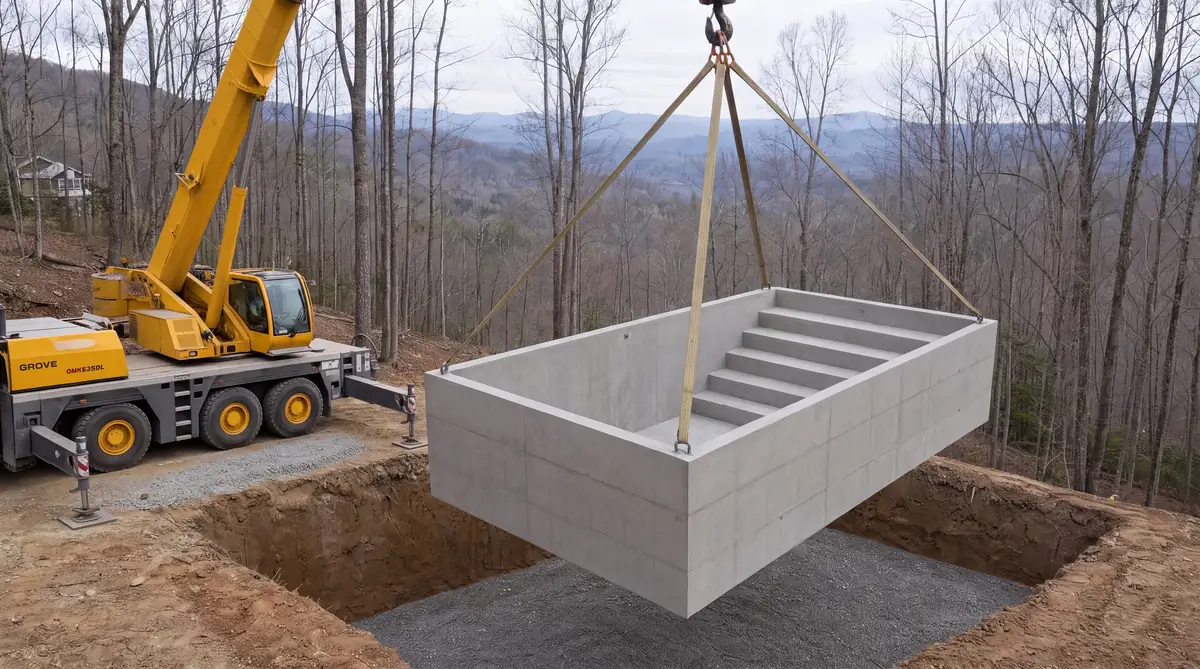
On a mountain lot, the same pool needs the hillside cut and walls built to hold back the
ground sitting above it. A considerable amount of material has to leave your property, and
drainage has to be built so that a heavy rain runs somewhere other than across your new
patio. All of
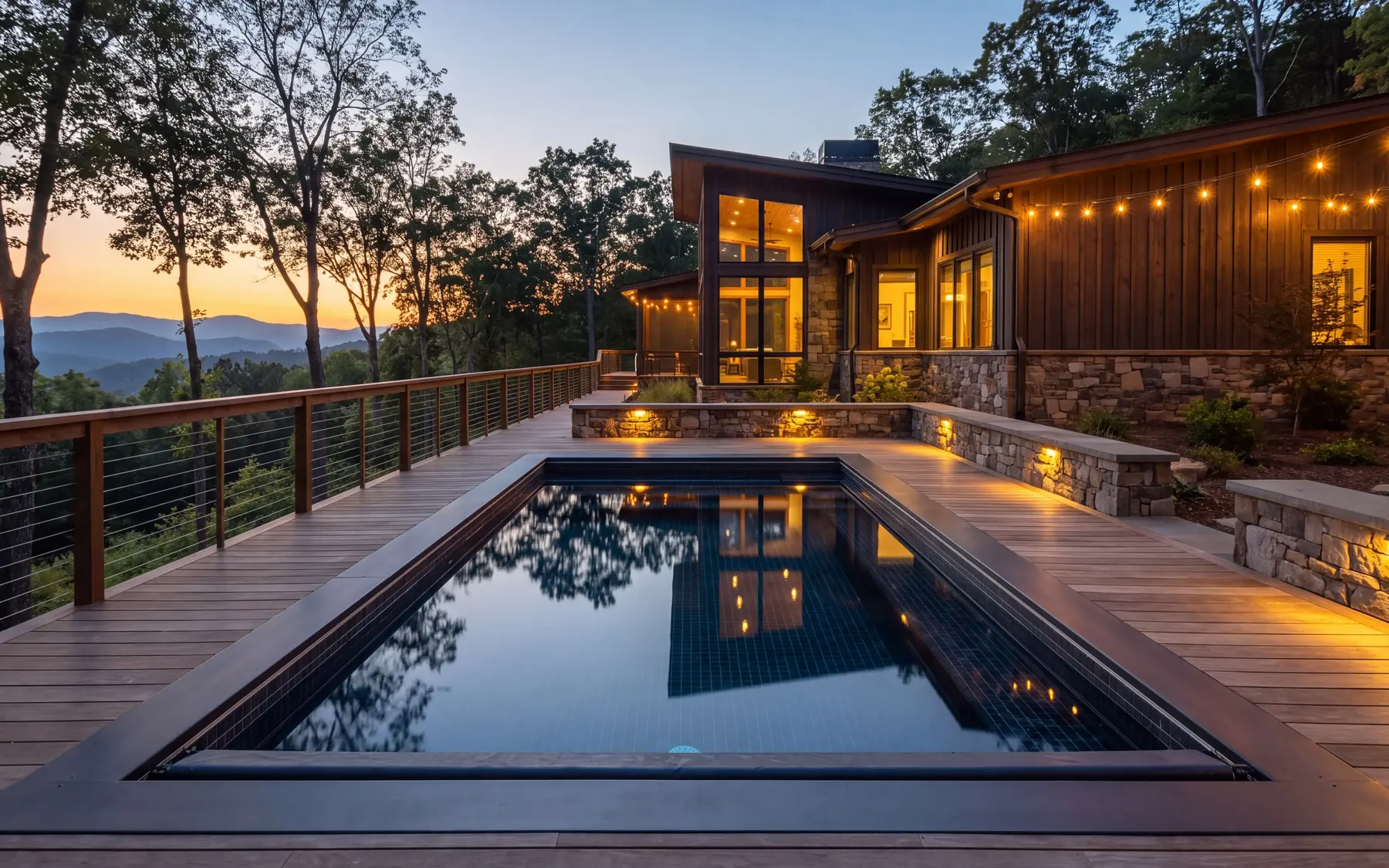
that happens before anybody sees a pool, and none of it is visible in the finished
photograph.
Ground work is the single largest variable in a quote in this region, and it is the reason
two properties four miles apart can be very different numbers for exactly the same pool.
What moves your number
Your ground
How much ground has to be cut, how much has to be held back by a wall, and how much soil leaves your property. On a steep lot this is frequently the
largest line on the quote after the pool itself, and it is the first thing we measure.
Rock
Rock is normal in this region and it is a cost rather than a stop. What decides how much it
costs you is whether there is any, how deep it begins, and how it has to be broken out. The
question worth asking is whether the contract prices it up front or treats it as a change
order once the machine hits it.
Access
Whether a delivery truck and a crane can reach the backyard. Narrow driveways, sharp turns,
low branches and overhead power lines are ordinary on property in this region, and any one
of them can rule out a full size shell. Where that happens the answer is a narrower pool
rather than a bigger bill, because precast concrete starts at around 7
feet wide and a gunite pool needs no delivery at all.
The pool itself
Size and pool type are the factors everybody expects to matter most, and frequently they are not the largest ones. A
12 by 26 is a different project from a 7 by 7 in the shell, the dig, the water and the
equipment.
The surround
Square footage and material multiply against each other, so a modest change in either one moves the deck cost noticeably. Poured concrete, pavers, natural stone and
porcelain tile cover a wide spread, and that spread multiplies against every square foot you
lay. A
smaller patio in stone often costs less and looks better than a sprawling one
in plain concrete.
Retaining and drainage
On sloped ground this is often the entire difference between two quotes that otherwise look
identical, and it is the part that becomes invisible once it is finished. A quote that
leaves retaining and drainage out is an incomplete quote rather than a cheaper one.
Septic
A great deal of property around here is on septic, and nothing can be built over the tank,
the drain field or the field reserve area. Working around all of that sometimes means a
smaller pool, which lowers the number, and sometimes means moving the pool to a harder part
of the yard, which raises it. Either way it needs finding before the design is settled.
Heating, covers, lighting and automation
Each of these four is a separately priced line on the quote. Heating and a
cover are what give you a season worth having at this elevation, and
lighting decides whether the pool gets used after the sun drops
behind the ridge. All of them are materially cheaper installed with the pool than added
later, because the conduit and the plumbing are already open.
What should be in your quote
A pool quote should tell you what is going to happen to your ground, not only what the pool
costs. Ours covers what gets dug, what gets held back, what leaves the property, and what
the pool will sit on. It also covers where water goes in a storm, how the electrical work is
run and grounded, what the surround is made of and how large it is, and what happens if rock
turns up.
If a quote you are comparing does not cover those things, you are not comparing two prices
for the same job. You are comparing a complete number against an incomplete one, and the
incomplete one always looks better until the work starts.
Four questions worth asking every contractor
- What is the pool sitting on? A compacted gravel base and a poured concrete slab are not the same thing, and on ground that is part original and part fill they behave differently over the years.
- Who carries the risk on rock? Priced in the contract, or a change order when the machine hits it.
- What is included in the surround, and how many square feet? Material and area are separate decisions and both move the number.
- Is the drainage designed or assumed? On sloped ground this is the difference between a patio that stays level and one that does not.