
📞 (828) 539-4201
Licensed & Insured Since 2019
Permits Handled End to End

Pool Permits in Asheville, NC

Every inground pool built legally in Western North Carolina needs a building permit, and the work is inspected at several points before you are allowed to fill it. Pool Builders of Asheville handles the whole process across Buncombe, Henderson and Madison counties, from the application through the final inspection, so that you never file a document or wait on an inspector yourself.

Permitting is the part of a pool project people expect to dread, and on our projects it happens without you being involved at all. We file the application, we book the inspections, and we meet the inspector on site.

Every inground pool in this region needs a permit

A swimming pool is a structure with electrical work, plumbing and a public safety requirement attached to it, so every county around Asheville requires a building permit before any ground is opened. Buncombe, Henderson and Madison counties all work to the same state code, but they do not all move at the same speed.

Madison County issues same day. No county we work in is faster, and on a Madison property the permit stops being part of the schedule at all. Buncombe we allow about 30 days for, and it is frequently a good deal less.

A pool permit covers considerably more than the shell, taking in the electrical supply and the bonding, the plumbing, and the barrier that has to surround the finished pool. On the sloped lots we work on it frequently takes in retaining walls and drainage as well, because those are structure rather than landscaping. A pool house or a cabana is a building in its own right and is permitted alongside the rest.
Not sure which pool suits your property?

Tell us where you are and what you are picturing, and we will work through the options with you.

Request a Quote

What the barrier rules actually require

The barrier is the requirement most people have heard of and the one most often got wrong, usually because a fence was ordered before anybody checked the numbers. North Carolina works to Appendix V of the Residential Code, and the figures below are what an inspector measures.

  • At least 48 inches high, measured from the ground on the outside of the barrier.
  • No more than 2 inches of gap between the bottom of the barrier and the ground.
  • No opening large enough to pass a 4 inch sphere, which is how an inspector measures the barrier itself rather than the gap beneath it.
  • Gates self closing and self latching, opening outward, away from the water.
  • Latch at least 54 inches above the ground, or mounted on the pool side below the top edge where a child cannot reach it.

Where a wall of the house forms part of the barrier, which is common and saves fencing across the most visible part of a yard, the doors leading out to the pool have to be protected as well. That decision belongs in the design, because retrofitting it into a finished house costs money that a drawing would have saved.

A barrier is not a pool cover, and a cover does not replace it. Both are worth having, and the county only asks about one of them.

The inspections a pool has to pass

A pool is inspected in stages as it is built. Each stage has to pass before the work is covered up, which is why the order of trades on a pool matters more than on most jobs.

Structure and steel is inspected before anything is concealed, covering the shell bedding and the reinforcement.

Electrical bonding ties the pool structure, the water, the handrails, the ladders and every piece of metal near the pool into one grounded system, so that nothing around the water can carry a current. The bonding gets an inspection of its own.

Plumbing covers the supply and return lines and the equipment connections, and it is inspected before the trenches are backfilled.

Final inspection covers the barrier and the completed installation, and it is what allows the pool to go into use.

Missing an inspection is not a paperwork problem. Work that has been covered up before it was seen has to be opened up again, which is the expensive way to find out.

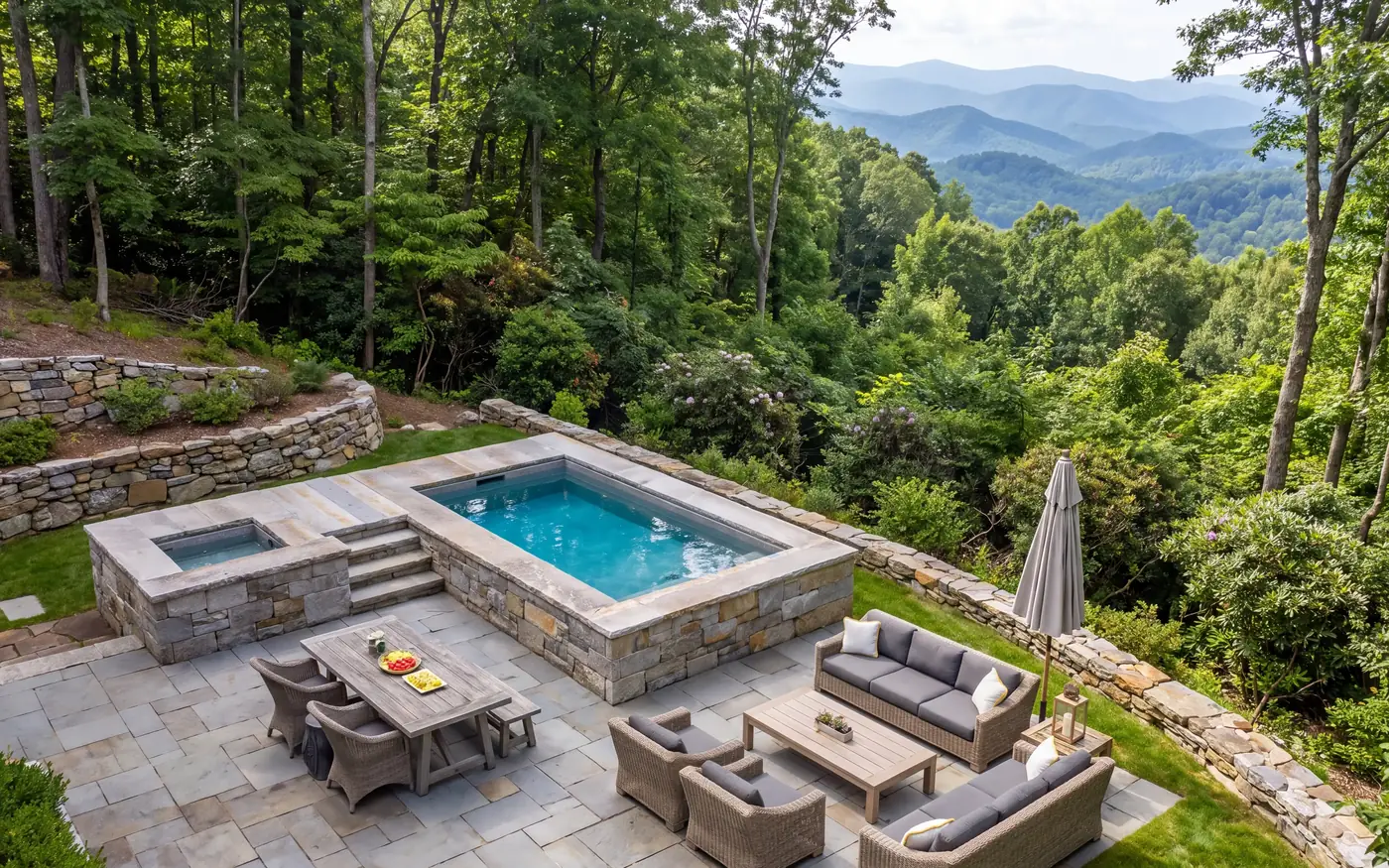
Raised pool and spa with a stone patio
One company, one quote

The grading, the pool, the decking, the lighting and the planting run as one project on one schedule, rather than five separate trades for you to coordinate.

We handle the permitting from application through final inspection, so you do not file anything and you do not chase an inspector.

See all services

What else gets checked on a mountain lot

Three things come up here that would not come up on flat ground, and all three are easier to deal with at design stage than at inspection.

Septic. A great deal of property around Asheville is on septic, and nothing may be built over the tank, the drain field or the reserve area. The reserve is the part that gets built over by accident, because there is nothing on the surface to mark it.

Setbacks and zoning. How close the pool and its surround can sit to a property line depends on the jurisdiction, and a property inside the Asheville city limit may answer to different rules from one just outside it.

Retaining and drainage. On a sloped lot these are structure, and where a wall is holding back ground it is inspected as such rather than treated as landscaping.

Who handles what

We handle the permit from end to end, which means the application and the drawings, the fees, the scheduling, and meeting every inspector on site. As a licensed North Carolina general contractor this is routine work, and it is one of the practical arguments for running a pool as one contract instead of as five trades you coordinate yourself.

What you do is decide what you want built. Nothing about the permitting process needs your time, and you will not be asked to file a document or wait in for an inspector.

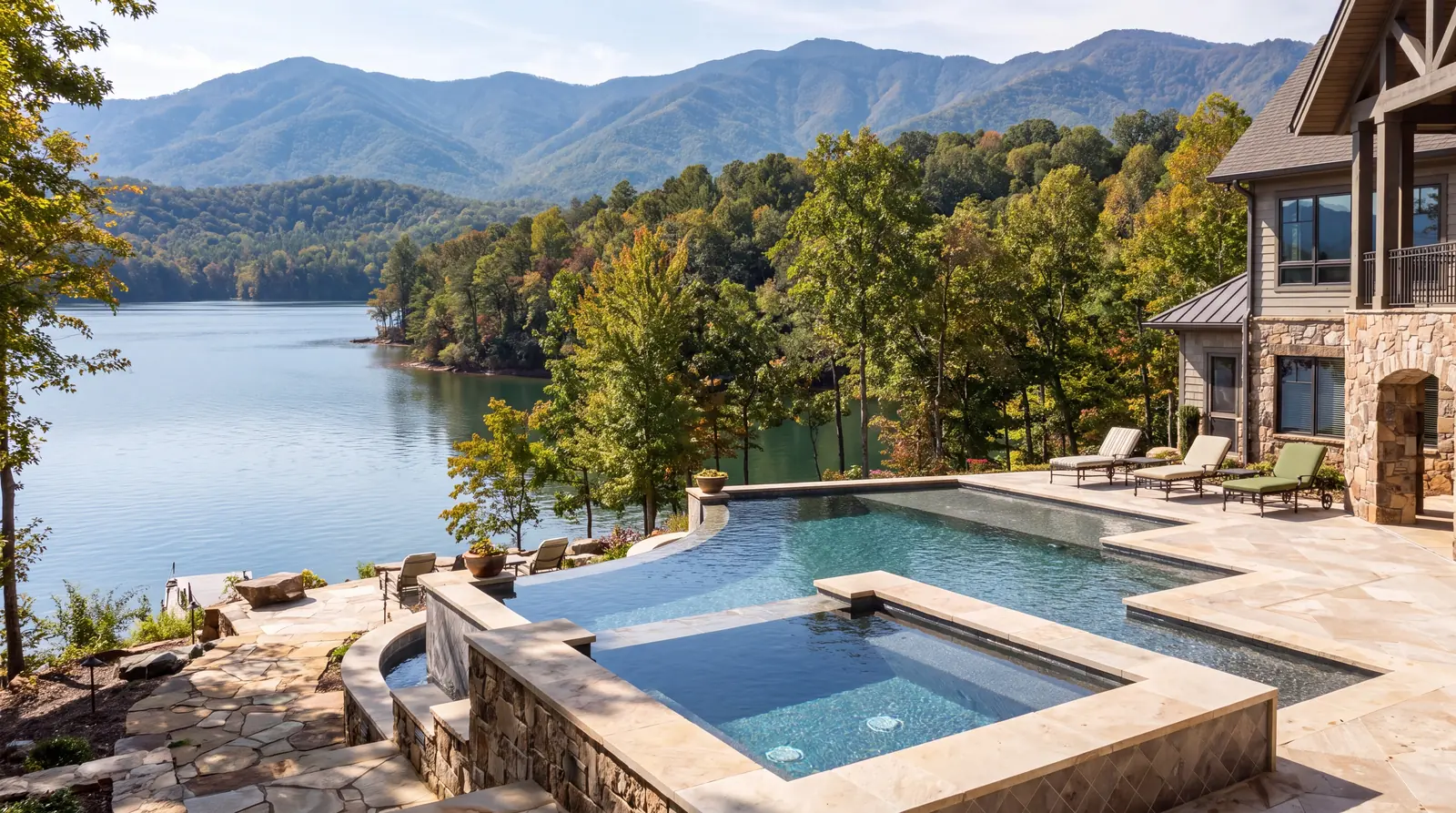
Infinity edge pool and spa overlooking a lake
Built for mountain property

Three things decide a pool project in this region: the slope of your land, the ground underneath it, and how easily we can reach the backyard. Our recommendation follows your property rather than a catalog, which on mountain ground matters a great deal more than it does anywhere flat.

Talk to us about your backyard

Building a pool without a permit costs more later

An unpermitted pool stays quiet until the property changes hands. At that point it appears in due diligence, a lender may want it resolved before closing, and resolving it means opening up finished work so that it can be inspected after the fact.

Permitting a pool at the start costs the fee and some paperwork. Explaining an unpermitted one later costs a great deal more, and it happens at the worst possible moment.

What drives the cost of a pool in this region

Talk to us about your project

Tell us where you are and what you are picturing. We will work out which jurisdiction your property falls under, what the barrier needs to look like on your particular yard, and how long the permit is likely to take. We allow about 30 days in Buncombe County and it is often less, Henderson runs to its own schedule, and Madison County issues same day. Whichever it is, we file at the start so the permit is in hand before any ground is opened.

Pool Permits in Asheville, NC FAQs

Do I need a permit to build a swimming pool in Buncombe County?

Yes. Any inground swimming pool requires a building permit, and the work is inspected during construction rather than only at the end. The same applies in Henderson County. We file the application and manage every inspection as part of the project, so it is not something you have to take on.

What does the permit cover?

More than the pool shell. A pool permit covers the structure itself, the electrical work and bonding, the plumbing, and the barrier that surrounds the finished pool. On a sloped lot it can also take in retaining walls and drainage, and a pool house or cabana is a building in its own right and is permitted alongside everything else.

How high does a pool fence have to be in North Carolina?

The barrier has to be at least 48 inches high, measured from the ground on the outside of the fence. Gaps underneath it are limited to 2 inches over ground such as grass, and no opening in the barrier itself may be large enough to pass a 4 inch sphere. Those figures come from Appendix V of the North Carolina Residential Code, which is what the inspector is working to.

What are the rules for a pool gate?

A gate into the pool area has to be self closing and self latching, and it has to open outward, away from the water. The latch is set high, at least 54 inches above the ground, or mounted on the pool side of the gate below the top edge where a child cannot reach it. A gate that has been propped open is the most common reason a barrier fails inspection.

Can my house wall count as part of the pool barrier?

In many designs it can, which is worth knowing because it saves fencing across the most visible part of the yard. Where a wall of the house forms part of the barrier, the doors leading out to the pool have to be protected, and the county will want to see how before it signs the work off. We settle that during the design rather than at the end.

How long does a pool permit take in Madison County?

Madison County issues same day, which is the fastest turnaround anywhere we work. If your property is in Madison County the permit is not what holds up the schedule.

How long does a pool permit take in Buncombe County?

We recommend allowing about 30 days in Buncombe County, and it is frequently a good deal less than that. Review time moves with how busy the office is and with how complete the application is when it lands. Ours are complete when they land, which is the part we control. The permit has to be in hand before any ground is opened, so it is the first thing we file rather than something we catch up on later.

What inspections does a pool need?

A pool is inspected in stages as it is built rather than once at the end. Steel and structure, electrical bonding, plumbing, and then a final inspection covering the barrier before the pool goes into use. Each one has to pass before the next stage of work is covered up, which is why the sequence matters more on a pool than on most jobs.

Do I need a permit for a hot tub or a cold plunge?

The unit itself is usually treated differently from an inground pool, and the pad, the electrical supply and any surround still involve permitted work. Get in touch with the details and we will tell you what applies before you commit to anything.

What happens if a pool was built without a permit?

It becomes a problem when the property is sold, because unpermitted work shows up in due diligence and the buyer's lender may want it resolved. Bringing existing work into compliance means opening some of it up for inspection. It is considerably cheaper to permit a pool at the start than to explain one later.

Do you handle the permit or do I?

We do. The application, the drawings, the scheduling and every inspection across Buncombe, Henderson and Madison counties are ours to manage. As a licensed North Carolina general contractor this is ordinary work for us, and it is one of the reasons a pool is better run as a single contract than as separate trades.

Get a Quote for Your Pool

Tell us where you are and what you are picturing. We will come out, measure what you have, and work through with you which pools suit your property and what each one would cost.

Call Now Free Quote