The two halves of a lighting design
Lights in the pool
LED fixtures set into the shell wall are inexpensive to run and they change the pool
completely after dark. Color changing and plain white units are the same fitting, so the
decision costs nothing at installation.
When you decide matters more than what you decide. On a precast or
fiberglass shell the lights are built in when the shell is made, which
means the number of them and where they sit is settled before anything is cast. Nothing can
be added to the wall afterward.
Lights everywhere else
Pool lights get most of the attention, and the light outside the water decides whether the space actually works after dark.
Step and path lighting is the safety layer, and on terraced ground with level changes
between the pool and the house it stops being optional.
Uplighting on retaining walls and trees gives a yard depth once the daylight has gone. On a
sloped Asheville lot the retaining walls are already the strongest lines in the design, so lighting
them turns structure you paid for into something you can see at night.
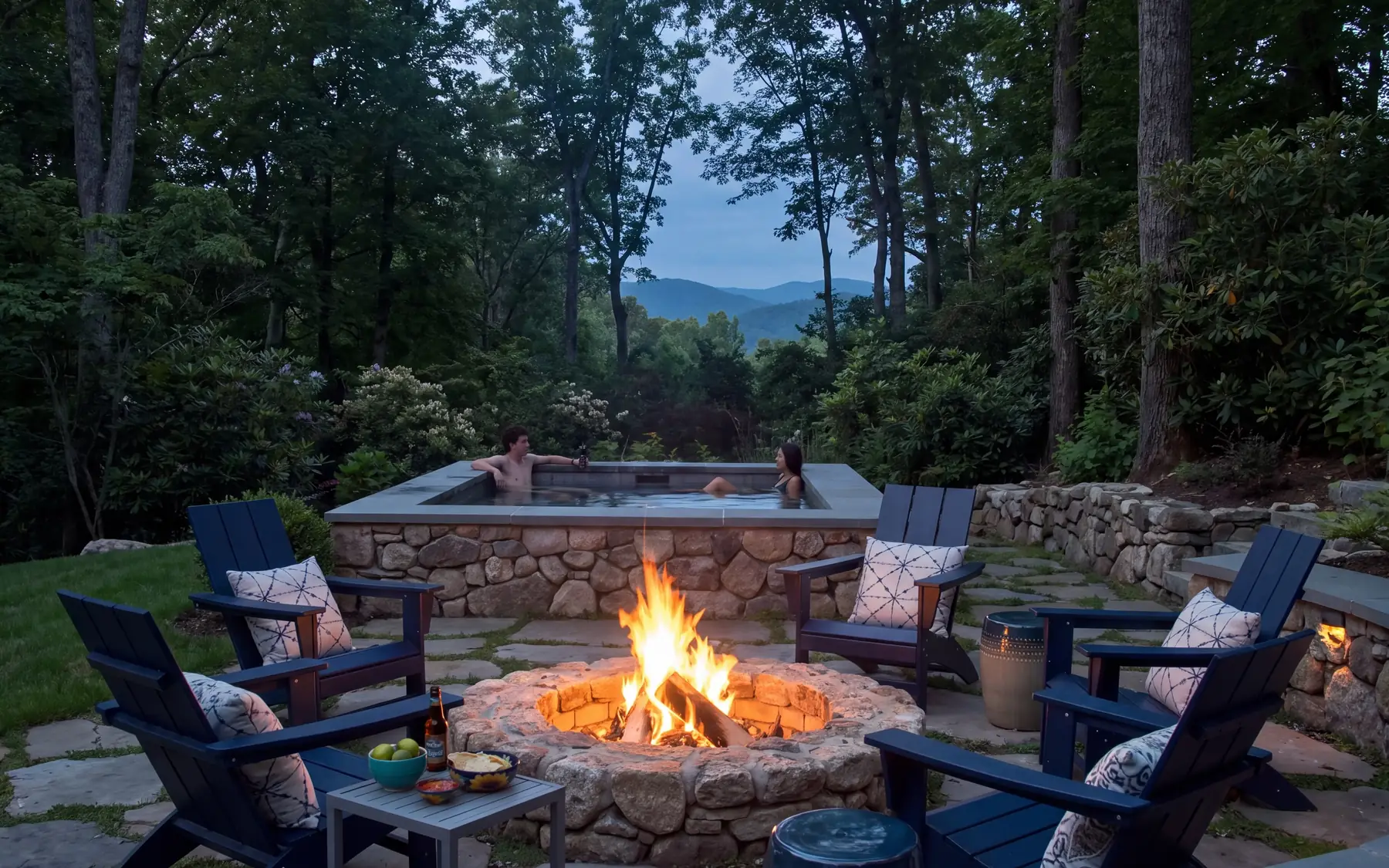
Light around the fire feature and the outdoor kitchen lets those parts of the
space work in October, which is the point of building them here at all.
Landscaping lit from below keeps a new pool area from reading as a lit rectangle in a
dark yard.
Why the conduit goes in first
Everything above runs on cable, and cable runs in conduit under the ground and under the
patio.
Laying conduit while the trenches are open and the machinery is already on site costs very
little. Laying it afterward means bringing equipment back into a finished yard, cutting the
patio, and matching a surface that will never quite match again.
The same logic applies to a gas line for a fire feature or a grill, which is why we plan the
lighting, the gas and the water together with the decking rather than
treating them as separate jobs.
Even if you are not fitting a light in a particular spot this year, an empty pipe running to
it is close to free now and expensive later.