
📞 (828) 539-4201
Licensed & Insured Since 2019
Permits Handled End to End

Pool Heating in Asheville, NC

Heating is what decides whether you own a three month pool or a six month one. Pool Builders of Asheville designs heating into every pool we build across Buncombe, Henderson and Madison counties, because at this elevation the limit on your season is water temperature rather than air temperature.

The middle of summer around Asheville looks after itself without any help from equipment. The months that decide whether a pool was worth building are May, September and October, and heating is how you get them.

Why elevation shortens the season

Air temperature is not the limit on a swimming season here, and pool water behaves differently in the mountains than it does anywhere flat. Water temperature is, and the two behave differently in the mountains.

Clear nights at this elevation pull heat out of a pool overnight, faster than people expect and faster than the same pool would lose it in a warmer, damper climate. An unheated pool therefore gives back much of what a warm day put into it, warms up weeks later in spring than a pool at lower elevation, and cools off earlier in fall.

Elevation also varies across the properties we work on. A pool at Black Mountain sits several hundred feet higher than one on the river bottom at Horse Shoe, and the ends of the season are where you feel that difference, not the middle.

What heating actually buys you

A heat pump paired with a cover turns three usable months into five or six. The weeks it buys sit at both ends of the year, which is where they are worth the most, because a September evening with the water at a comfortable temperature is the thing people remember about owning a pool.

Heating does not buy you a better July. What it buys is a May you can use and an October you did not expect to get.
Not sure which pool suits your property?

Tell us where you are and what you are picturing, and we will work through the options with you.

Request a Quote

The three pieces of a heating system

A heat pump

A heat pump moves heat out of the surrounding air into the water rather than burning fuel to create it. Moving heat instead of making it is why a heat pump is the least expensive unit to run, and why it suits a pool you want warm across a whole season. Heat pumps work more slowly than gas, so they hold a temperature better than they reach one.

A gas heater

A gas heater burns propane or natural gas and brings water up far faster, at a higher running cost per hour. Speed suits a pool used at weekends, a rental property where the pool has to be ready when guests arrive, or a spa you want hot on demand instead of kept hot all week.

A good number of properties end up with both, running a heat pump on the pool and gas on the spa, and the equipment pad is sized for that from the start.

A cover

Most of the heat a pool loses goes off the surface, which means a cover is doing more work at this elevation than the heater is. A cover holds in overnight what you have already paid to put in during the day.

Running a heater without a cover is the most expensive way to own a pool in the mountains. We would rather fit both than sell you a bigger heater to fight a problem a cover solves. The pool covers page sets out the options, including automatic covers that close in under a minute.

Chilling, which nobody expects to need

A chiller cools water instead of warming it, and units are available that do both jobs from one box.

Chilling sounds excessive in a region with winters like these, right up until August. A small pool with a dark interior finish sitting in full sun runs warmer than anybody wants to swim in. A plunge pool does that more readily than a large one, because there is less water to hold the temperature down.

On a small pool, a dark tiled pool, or a pool in a sun trap, chilling is worth discussing at the design stage instead of discovering it in your first summer.

Designing heating in from the start

Retrofitting heating onto a finished pool is possible, and it always costs more than doing it at the same time as the pool.

Three things have to be in place before a heater can go on. The equipment pad has to be sized for the unit, the electrical service or the gas line has to reach it, and your panel has to have spare capacity. On a precast pool, anything built into the shell itself has to be decided before the shell is cast, because nothing can be added afterward.

Deciding on heating during the design costs the price of the unit. Deciding afterward costs the unit, the trenching, the electrical work and an upgrade to your panel.

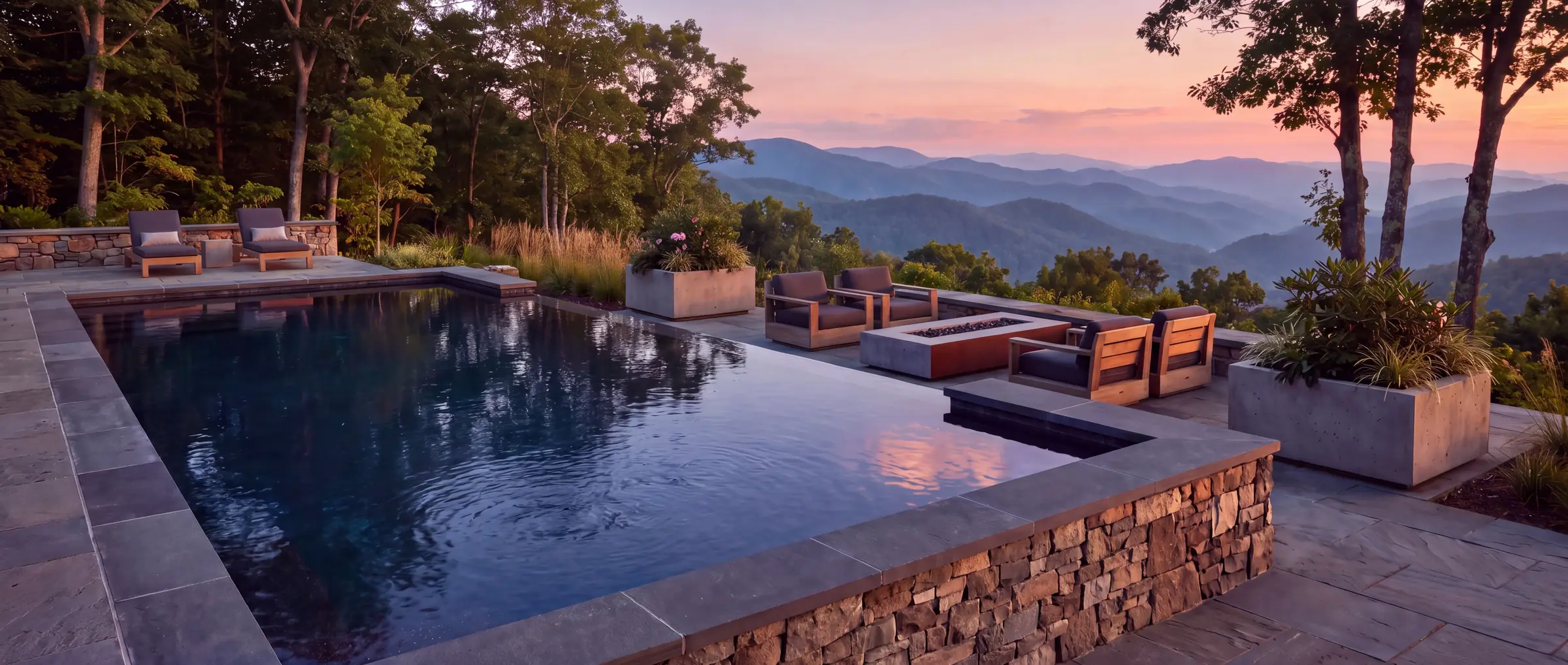
Infinity edge pool with a mountain view at sunset
One company, one quote

The grading, the pool, the decking, the lighting and the planting run as one project on one schedule, rather than five separate trades for you to coordinate.

We handle the permitting from application through final inspection, so you do not file anything and you do not chase an inspector.

See all services

Running a heater without wasting money

Automation is how a heated pool avoids becoming an expensive one. Putting the pump, the heater and the lights on a schedule you can change from your phone means bringing the water up the day before you want it instead of heating water nobody swims in.

Two other decisions help more than people expect. A cover, as above, does the heavy lifting overnight. And a smaller body of water is simply cheaper to keep warm, which is one of the reasons a plunge pool suits mountain property so well.

What heating costs

Heating is a separately priced line on a pool quote, and three things move the figure: the unit you choose, the distance from the pool to your electrical panel or gas supply, and whether that panel has capacity to take it.

We price heating as part of the pool instead of as an extra, because on a property at this elevation it is not really optional if you want a season worth having.

What drives the cost of a pool in this region

Talk to us about your season

Tell us where you are, what you are picturing and how you want to use the pool through the year. We will work through the heating options with you as part of the design, not after it.

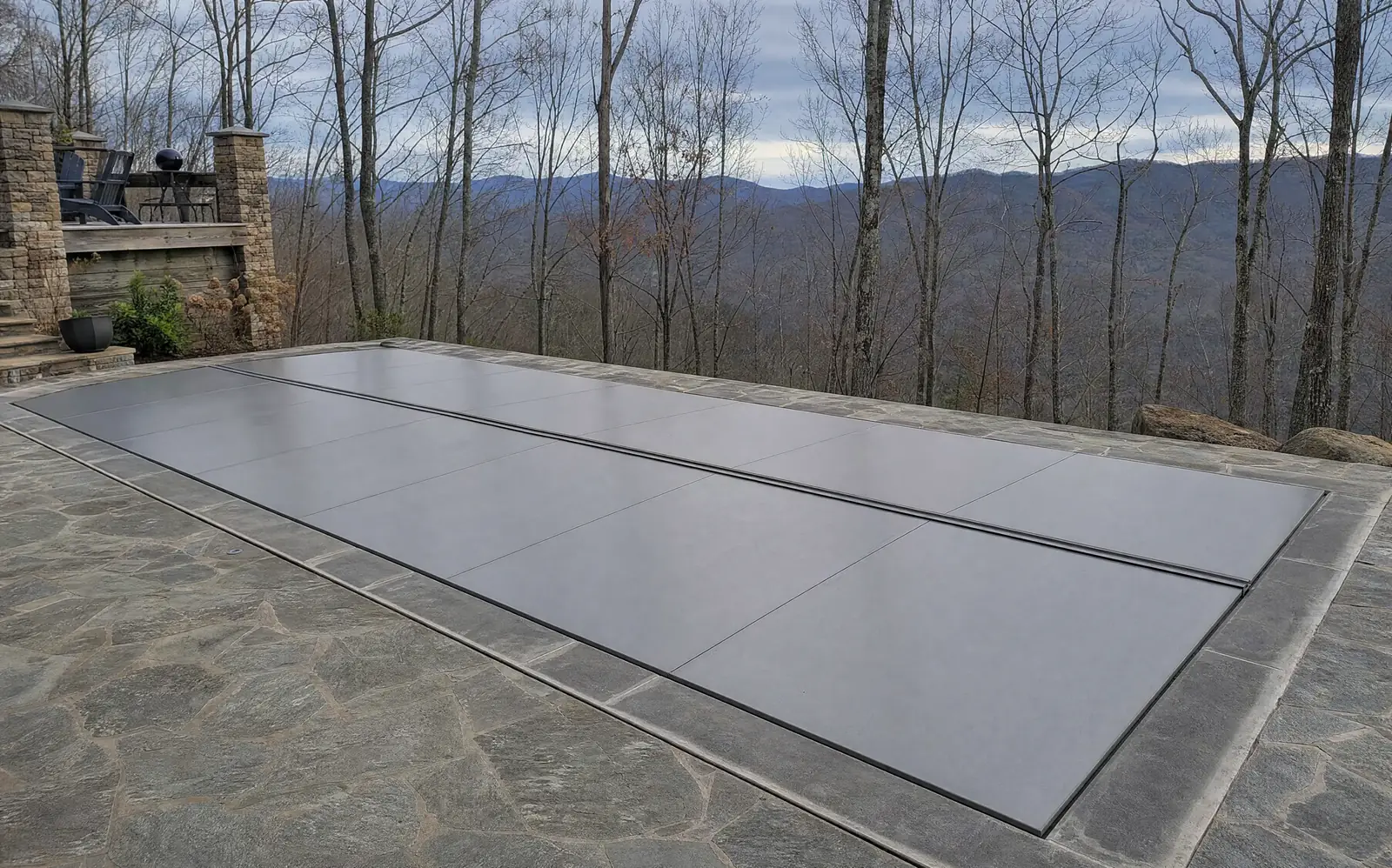
Pool covered for winter
Built for mountain property

Three things decide a pool project in this region: the slope of your land, the ground underneath it, and how easily we can reach the backyard. Our recommendation follows your property rather than a catalog, which on mountain ground matters a great deal more than it does anywhere flat.

Talk to us about your backyard

Pool Heating in Asheville, NC FAQs

Does a pool in the Asheville area really need heating?

If you want more than three months of use, yes. The limit here is water temperature rather than air temperature, because clear mountain nights draw heat out of a pool overnight. An unheated pool gives back much of what the day put into it, so it warms up late in spring and cools off early in fall.

How much longer does heating make the season?

A heat pump paired with a cover turns three usable months into five or six, and the weeks it buys you sit at both ends of the year rather than in the middle. May and September are the months heating actually gives you. The middle of summer looks after itself.

Heat pump or gas heater, which is better?

A heat pump costs less to run and suits a pool you want warm across the whole season, because it moves heat out of the air rather than burning fuel to make it. A gas heater costs more per hour and heats far faster, so it suits a pool used at weekends or a spa you want hot on demand. A good number of properties here end up with a heat pump for the pool and gas for the spa.

Does a cover really matter?

A cover matters more than people expect, and at this elevation it does more work than the heater does. Most of the heat a pool loses goes off the surface overnight, so a cover holds in what you have already paid to put there. Running a heater without a cover is the most expensive way to own a pool in the mountains.

What is a chiller, and would I need one?

A chiller cools the water rather than warming it, and units are available that do both. Chilling sounds excessive until August, when a small pool with a dark interior finish in full sun runs warmer than anybody wants to swim in. On a plunge pool or a dark tiled pool it is worth discussing.

Can heating be added to a pool later?

It can, and it costs more that way. The equipment pad has to be sized for a heater, the electrical service or the gas line has to reach it, and on a precast pool anything built into the shell has to be decided before the shell is cast. Designing heating in from the first day is considerably cheaper than retrofitting it.

How much does pool heating cost to install?

Heating is a real line on the quote rather than rounding, and the figure depends on the unit, the distance from the pool to your electrical panel or gas supply, and whether that panel has spare capacity. We price it as part of the pool rather than as an afterthought. See what drives pool cost in this region.

Is a smaller pool cheaper to heat?

Considerably, because you are heating less water. A plunge pool warms up faster, holds temperature more easily and costs noticeably less to run through spring and fall, which is one of the reasons a smaller pool suits mountain property so well.

Can I control the heating from my phone?

Yes. Automation puts the pump, the heater, the lights and the sanitizer on a schedule you can change remotely, which matters more with heating than with anything else, because bringing a pool up to temperature the day before you want it is how you avoid heating water nobody swims in.

Do you install heating on a pool you did not build?

Get in touch and we will talk it through. What decides the answer is the state of the existing equipment pad, the electrical service and the plumbing, so it needs looking at rather than answering over the phone.

Get a Quote for Your Pool

Tell us where you are and what you are picturing. We will come out, measure what you have, and work through with you which pools suit your property and what each one would cost.

Call Now Free Quote