
📞 (828) 539-4201
Licensed & Insured Since 2019
Permits Handled End to End

Shipping Container Pools in Asheville, NC

Pool Builders of Asheville installs shipping container pools across Buncombe, Henderson and Madison counties. A container pool is a steel pool built inside a standard shipping container, 8 feet wide and either 20 or 40 feet long, delivered to your property already finished. A container pool is not an inground pool, because it sits above ground on a pad or set into a slope, and that is exactly what makes it work on properties where a full dig would be an expensive undertaking.

Container pools answer a problem this region produces constantly, which is a yard worth putting a pool in and no way to get a pool into it. Everything about the design follows from being 8 feet wide and arriving on an ordinary flatbed truck instead of an oversized load.

What a container pool installation involves

The site visit

Before anything is priced, we come out and measure your yard. We check where the pool would sit, how much the ground slopes there, how deep the rock is, where water runs in a heavy rain, and how far it is to your electrical panel. We also work out the question that decides everything else, which is whether a flatbed truck can get down your driveway and turn around.

Access is why most people end up here in the first place. A container is 8 feet wide, which makes it an ordinary truck on an ordinary road instead of an oversized load needing an escort and a wide route in.

Deciding how the pool sits

Three positions are possible, and your ground usually chooses between them.

Above ground on a pad is the simplest of the three and the least expensive. A pad suits a flat yard, and it gives you a raised edge to build a deck onto.

Set into the slope is the version that suits the majority of properties around here. The uphill side is buried and disappears, while the downhill side stays open and becomes a raised wall you build a deck off. On a lot with slope on it, this is the version that no longer reads as a container.

Fully in the ground is possible and it is the most expensive of the three, because you are back to digging a full hole, which is the cost you came here to avoid.

Permits

A container pool is a permanent pool and it gets permitted like one, including the barrier and the electrical work. We handle the permitting from application through final inspection, so you do not file anything and you do not chase an inspector.

Base, footings and retaining

Whatever the pool sits on has to carry the weight, and a pool full of water is heavy. A 40 foot container at 4 feet of water holds around 9,000 gallons, which is roughly 75,000 pounds of water before you count the steel. Carrying that means a poured pad or footings sized for your ground, and on a cut into the slope it means retaining as well.

The base and the retaining are where the money and the time actually go on a container pool, and they are the part that varies most from one property to the next.

Delivery and setting

The pool arrives finished on a flatbed, and depending on your access it is craned, rolled or slid into position. On a straightforward property that is a single day.

Plumbing, electrical work and drainage

Most of the plumbing is already inside the container, so what remains is the pipe run to the equipment pad and the electrical work. That is done by a licensed electrician and inspected as part of the permit.

Drainage around the outside is built here as well. On a unit set into a slope the drainage matters more than anything else on this list, because water sitting against buried steel is the one thing that shortens its life.

Deck, coping and handover

The deck goes on and the edges are finished, which is the step that changes what the whole thing looks like. We then fill it, balance the water, and start up and set the equipment.

What size a container pool is

Eight feet wide. A standard shipping container is 8 feet across and that is not adjustable, so the water ends up a little narrower once the wall and the lining are in.

Twenty or forty feet long. A 20 foot pool works as a plunge and cooling off pool, while a 40 foot pool is a genuine lap pool.

Three to five feet of water is the usual range, which is deep enough to swim in and shallow enough to stand up anywhere, although it is not a diving pool.

Be honest with yourself about the width before you commit, because eight feet is a swim lane rather than a play area. If you are picturing people spread out across a pool rather than swimming up and down it, a fiberglass or precast pool will suit you better.
Not sure which pool suits your property?

Tell us where you are and what you are picturing, and we will work through the options with you.

Request a Quote

What we can add to a container pool

Heating and a cover

Both are worth planning on at this elevation, because a smaller body of water warms up quickly and loses that heat just as quickly, and clear mountain nights draw heat out of a pool fast. A heat pump and a cover are what turn a three month pool into a six month one, and both are cheaper installed than added later.

Swim jets

A swim jet turns a 20 foot pool into an endless one, because you swim against the current instead of swimming lengths. On a short container that single addition changes what the pool is for.

Lighting

LED lights go into the wall, along with lighting on the deck, the steps and the planting around it. All of it is one electrical run and all of it is far cheaper done at the same time.

Salt chlorination and automation

A salt system makes chlorine from salt dissolved in the water rather than you carrying jugs of chemical. Automation puts the pump, the heating and the lights on a schedule you can change from your phone.

A window

An acrylic panel can be set into the side wall where the pool is raised or set into a slope so that one side is exposed. A window has to be designed in from the start, and availability depends on what the supplier builds.

The deck and everything around it

A deck is not an optional extra on a container pool, because it is most of the finished result. A deck built out from the raised side turns a container in a yard into a pool with a deck around it. Add steps up to it, coping, a shaded area and perhaps a fire pit at the far end, and the container itself stops being what you notice.

Why container pools work on Western North Carolina properties

Access is the whole argument

Around here the reason a pool does not happen is usually not the yard itself. The route to the yard is usually the obstacle. Narrow driveways, tight switchbacks, mature hardwoods, overhead power lines and a bridge over a creek with a weight limit on it can each end a conversation about a 16 foot shell on an oversized trailer.

Containers fit the road system they were designed for, and that is the entire point of using one.

Small and awkward yards

A pool 8 feet wide fits along the side of a house, on a bench cut into a slope, or in the one flat strip of a yard that is not otherwise usable. Property up here has a great many of those strips.

Less ground moved

The single biggest cost driver in this region is how much dirt has to be cut, held and hauled away. A pool that sits mostly above ground, or that is set into a bench instead of being dropped into a hole, avoids most of that, which is why the number comes in lower here specifically rather than just generally.

Septic

A great deal of this market is on septic, and the septic system decides where a pool can go. Nothing can be built over the tank, the drain field or the field reserve area, and that reserve is easy to build over by accident because there is nothing to see on the surface.

A narrow pool has options that a wide one does not. Locating the tank, the field, the reserve and the buried lines is one of the first things we do on a site visit, and on a septic property it is often what points toward a container pool in the first place.

Rock

Rock is less of a problem here than anywhere else in our range, for the obvious reason that there is much less digging involved. On a property where rock is known to be shallow, that is a real argument.

Container compared with the pools that go in the ground

Container and precast concrete

A precast pool is a reinforced concrete shell craned in finished, and it starts at around 7 feet wide, so precast now reaches many of the same tight properties a container does. Precast goes fully into the ground, comes in a wider range of proportions, and can be finished in tile. Container sits above ground or into a slope and needs less digging, so it usually costs less on a difficult site.

Container and fiberglass

A fiberglass pool is wider, at up to around 16 feet, with molded steps, benches and tanning ledges and a smooth gelcoat surface, and it needs a wide route in and a crane. A container is half that width, arrives on a normal truck and costs less because there is less ground work. Width and access is the whole of that decision.

Container and gunite

A gunite pool is built in place, so it also solves difficult access, but it does so by taking months and costing considerably more. If access is your only problem and the size suits you, a container gets there far faster. If you want a large custom pool on a property nothing can reach, gunite is the answer.

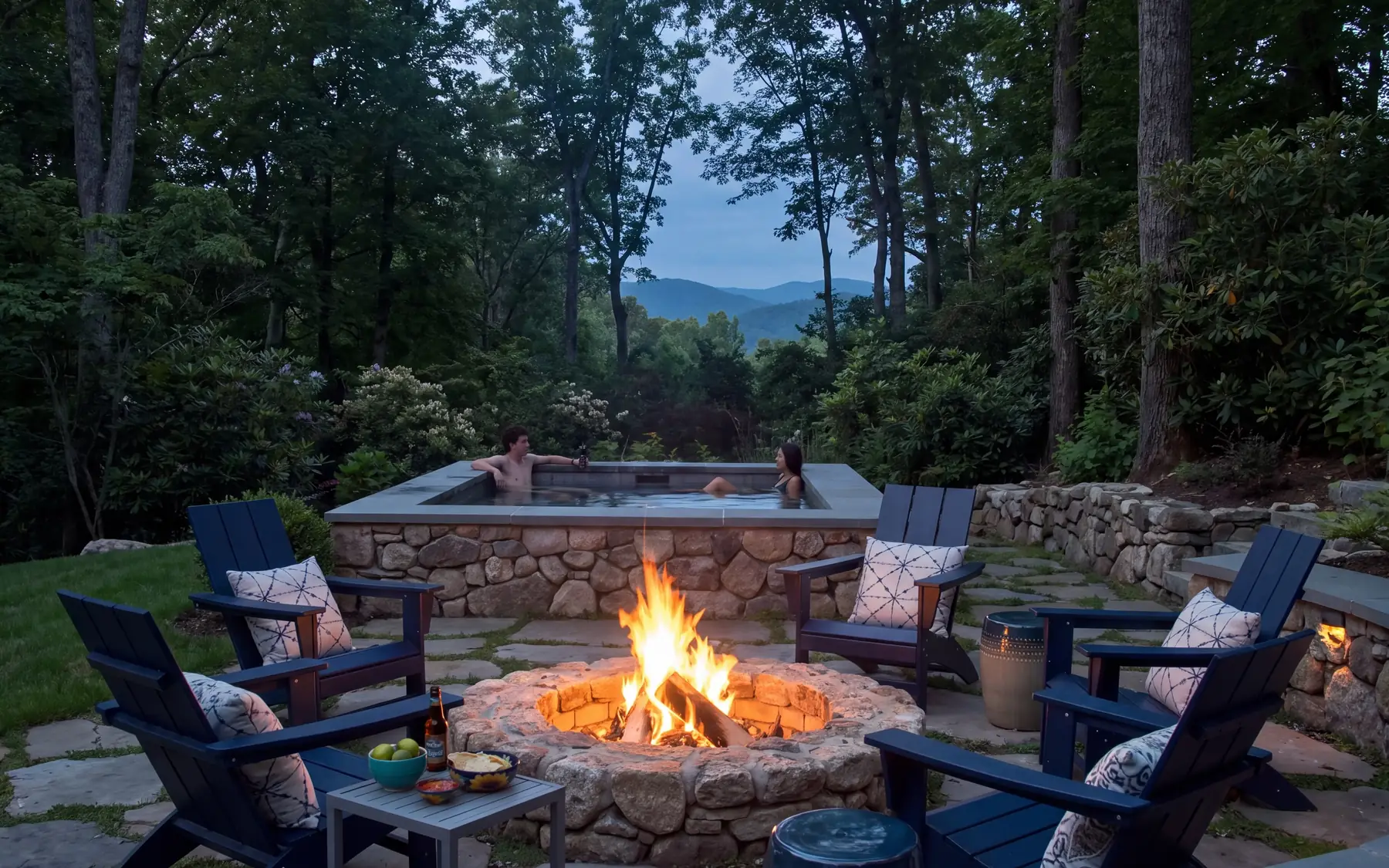
Raised spa and fire pit with a mountain view
One company, one quote

The grading, the pool, the decking, the lighting and the planting run as one project on one schedule, rather than five separate trades for you to coordinate.

We handle the permitting from application through final inspection, so you do not file anything and you do not chase an inspector.

See all services

How much does a container pool cost in Asheville?

Most container pools around here land between $55,000 and $135,000 installed.

The lowest figure in that range assumes a level site: flat ground, easy access, a simple pad and a modest deck. Around here that is the exception rather than the rule. How much grading and excavating your ground needs is the single biggest thing moving your number, along with the size of the pool and everything you put around it.

What moves you inside the range

Twenty foot or forty foot. The single biggest choice you make on a container pool.

How the pool sits. A pad on flat ground is the least expensive of the three. Setting the pool into a slope means building retaining as well. Putting it fully in the ground means digging, and you are then paying for the thing this pool exists to avoid.

The pad or the footings, sized for your ground, which on a slope is real structure.

The deck. A large share of the finished cost, because it is a large share of the finished result.

Access. Whether the truck gets down the driveway and turns around, or whether it does not.

Heating, a cover, lighting, a swim jet and automation. Each one is a real line on the quote and each one is cheaper now than later.

A window, which adds cost and is only available if the build you choose offers one.

What drives the cost of a pool in this region

How long does a container pool take?

Weeks rather than months, and a container pool is the quickest thing we install. Permitting comes first, and then the pad or the footings and whatever holding back your ground needs, which is the part that varies. Delivery and setting is usually a single day, and after that comes the plumbing, the electrical work, the drainage, the deck and the startup.

Weather is a real part of the schedule here, because ground and concrete work during a wet spell stops rather than slows.

Is a container pool right for your property?

A container pool suits you if

  • Nothing wide can get to your backyard
  • Your yard is small, narrow, steep or awkwardly shaped
  • You want to swim laps and cool off rather than host a crowd in the water
  • You want the lowest ground work bill available on a mountain lot
  • You want the pool finished this season rather than next

A container pool is the wrong choice if

  • You want a wide pool. Eight feet is eight feet, so a fiberglass or precast pool is what you are after.
  • You want a shallow end that children can stand and play in across the width. A container is a lane rather than a room.
  • You want a custom shape, a beach entry or a built in spa. That is gunite.
  • Your yard is flat, wide and easy to reach. You are not buying the thing a container pool is good at, and one of the others will probably suit you better.
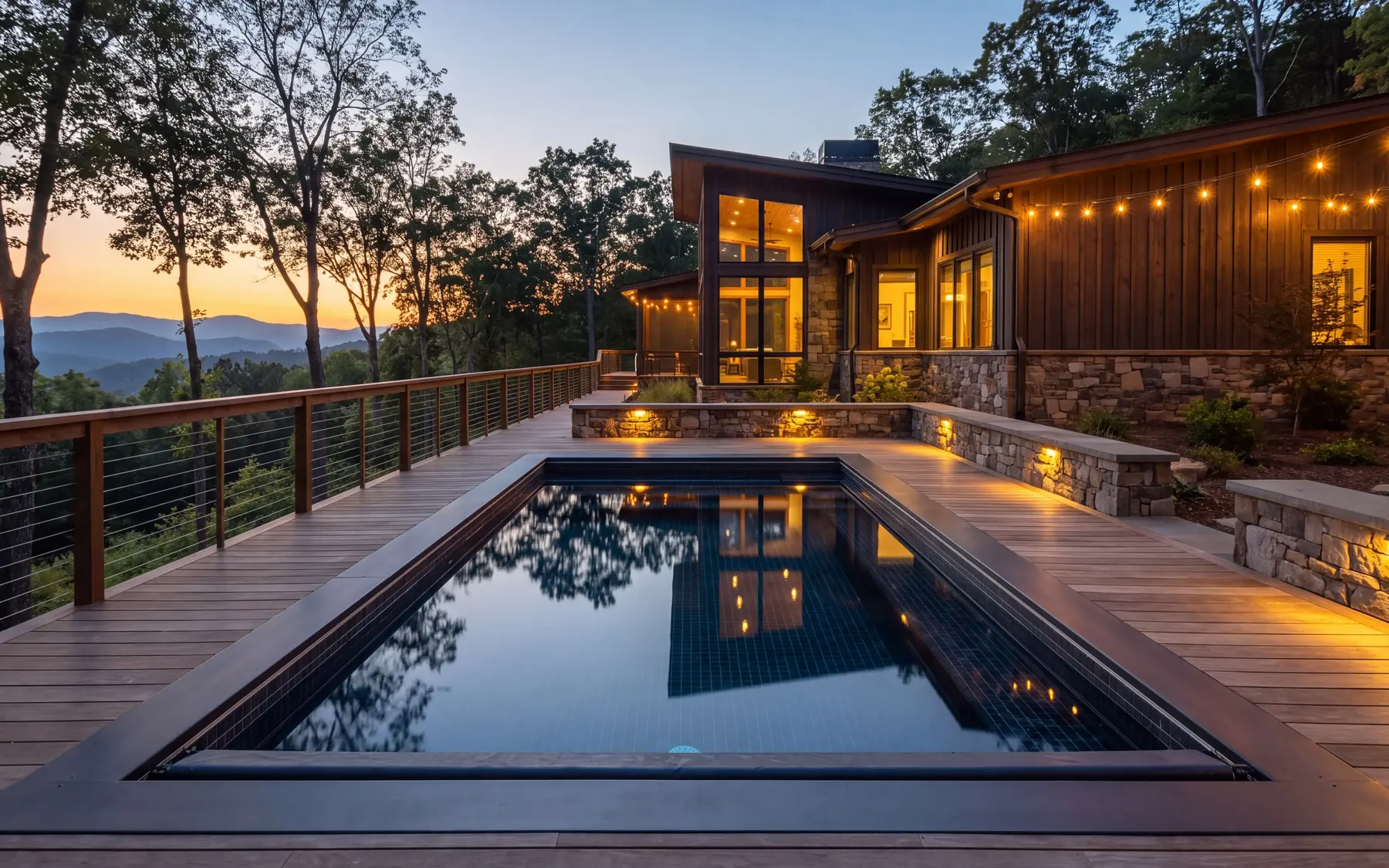
Pool set into a timber deck with landscape lighting at dusk
Built for mountain property

Three things decide a pool project in this region: the slope of your land, the ground underneath it, and how easily we can reach the backyard. Our recommendation follows your property rather than a catalog, which on mountain ground matters a great deal more than it does anywhere flat.

Talk to us about your backyard

Talk to us about a container pool

Tell us where you are and what you are picturing. We will come out, measure what you have, and work through with you which pools suit your property and what each one would cost.

Shipping Container Pools in Asheville, NC FAQs

What is a shipping container pool?

A container pool is a pool built inside a standard shipping container. The container is cut down, reinforced, sealed and lined, and the plumbing and the equipment are fitted in the factory, so it arrives as a finished pool on a normal flatbed truck. Standard containers are 8 feet wide and either 20 or 40 feet long, which is a large part of why they reach properties that other pools cannot.

Is a container pool an inground pool?

No, and that distinction matters when you are comparing quotes. A container pool sits above ground on a pad, or set into a slope so that one side is buried and the other stays open. Fully burying one is possible but it puts you back into digging a full hole, which is the cost a container pool exists to avoid. If you want a true inground pool, look at precast concrete, fiberglass or gunite instead.

How big is a container pool?

Eight feet wide on the outside, so the water is a little narrower than that, and either 20 or 40 feet long. Water depth usually sits somewhere between about 3 and 5 feet. A container pool works well as a lap pool, a cooling off pool and a family pool for a small yard, although it is too narrow for people to spread out across.

Can it have a window?

Some builds do, using an acrylic panel set into the side wall, and it only works where the pool is raised or set into a slope so that one side is exposed. A window has to be part of the build from the start, and whether it is available depends on the supplier, so it is worth asking about early rather than assuming it.

How much does a container pool cost around Asheville?

Most container projects land between $55,000 and $135,000 installed. The spread is wide because the pool itself is only part of the cost. What moves the number is the site work, the pad or the footings, the retaining if the pool is set into a slope, and the decking you build around it.

Why is it less expensive than a full inground pool?

A container pool is smaller and it needs far less site work. There is no large hole, or a much smaller one, less material hauled away, and often no crane at all. Container pools are not cheap in absolute terms, because you are still building a real pool with real plumbing, real electrical work and a real deck around it, but the ground work that drives price in this region is largely avoided.

Will the steel rust?

Container steel is a weathering alloy, and the water side is sealed and lined instead of left bare, using a fiberglass or composite lining, a heavy polymer coating or a liner depending on the build. What decides how long it lasts is the quality of that lining and the drainage around the outside, and the drainage is the part that happens on your property, not in the factory.

How long does a container pool take to install?

Weeks rather than months, and most of that time goes into the pad, the footings and whatever holding back your ground needs. Delivery and setting is typically a single day, which makes a container pool the quickest thing we install.

Can it be heated?

Yes, and at this elevation you should plan on it. A container pool holds less water than a full size pool, which cuts both ways, because it warms up faster and it also gives that heat back to a cold clear night faster. A heat pump and a cover are what turn it into a pool you use in May and October.

I am on a septic system. Does that rule it out?

Less often than it rules out a bigger pool, and that is one of the real arguments for a container. Nothing can be built over the tank, the drain field or the reserve area, but a pool 8 feet wide fits into a strip of yard that a 16 foot shell has no chance in. Locating all of it is one of the first things we do.

Do I need a permit for a container pool?

Yes, because it is a permanent pool and it is permitted like one, including the barrier and the electrical work. We handle it from application through final inspection.

Can you build a deck around it?

That is usually the whole design. A container pool set into a slope with a deck built out from the high side stops looking like a container and starts looking like a pool with a deck around it. The deck, the coping, the drainage and the lighting are all part of the same quote.

Get a Quote for Your Pool

Tell us where you are and what you are picturing. We will come out, measure what you have, and work through with you which pools suit your property and what each one would cost.

Call Now Free Quote