
📞 (828) 539-4201
Licensed & Insured Since 2019
Permits Handled End to End

Pool Covers in Asheville, NC

A cover is the least glamorous thing on a pool quote and one of the most useful. Pool Builders of Asheville fits automatic covers, mesh safety covers and winter covers across Buncombe, Henderson and Madison counties, and on mountain property a cover does more to lengthen your season than the heater does.

Nobody chooses a pool because of the cover. Around here, though, a cover does more work per dollar than almost anything else on the quote, because it sits between your water and the thing that shortens your season.

Why covers matter more at this elevation

Clear nights around Asheville draw heat out of a pool overnight, and most of that heat leaves through the surface of the water. A cover puts a lid on the single biggest loss a mountain pool has.

Leaves are the second reason to fit one. A great deal of property around Asheville has hardwoods around it, and an uncovered pool in October becomes a full time job with a net, whereas a covered one is a job you do at the start and end of the season.

Safety is the third, and it is the one that changes what you worry about. A properly specified safety cover carries weight, which is a different level of protection from a barrier alone, and it matters on any property where children or dogs move around the yard unsupervised. Nobody plans for the afternoon when a gate gets left open, which is exactly why a cover that holds weight is worth having on a property with a slope running down toward the water.
Not sure which pool suits your property?

Tell us where you are and what you are picturing, and we will work through the options with you.

Request a Quote

The three kinds of cover

Automatic covers

An automatic cover runs on a track along both sides of the pool and closes in under a minute at the turn of a key. Convenience is the whole argument, and it is a stronger argument than it sounds, because a cover you have to wrestle with is a cover that stays open all summer.

Automatic covers work best when they are designed in with the pool. The tracks sit in the coping and the housing needs somewhere to live at one end of the pool, so building them into the surround looks far better than bolting them on afterward.

Straight sided pools take an automatic cover most easily, because the track has to run true. A precast concrete or fiberglass shell in a rectangular form is the simplest case of all.

Mesh safety covers

A mesh safety cover anchors into the deck and stretches tight across the water, carrying weight while letting rain drain straight through. Mesh is the usual winter answer in this region, because it handles leaf fall and it does not pond water on top the way a solid cover can.

Mesh covers come off and go back on seasonally rather than daily, so they suit closing a pool down more than they suit using one.

Solid winter covers

A solid cover blocks light as well as debris, which keeps algae down through the months when the pool is not being treated. Solid covers need a pump or a drain arrangement to handle standing water, since nothing passes through them.

A good number of properties here run an automatic cover through the season and a separate winter cover from November. The two do genuinely different jobs, and owning both is normal rather than excessive.

Covers and heating work as a pair

A heater without a cover spends every night replacing heat that has gone off the surface. A cover without a heater holds temperature but cannot lift it. Fitting both is how a pool in the Asheville area gets a season worth having.

If the budget will only stretch to one of them in the first year, we would fit the cover first. Covers cost less, they save money from the first night, and adding heating later is straightforward as long as the equipment pad and the electrical service were sized for it at the start.

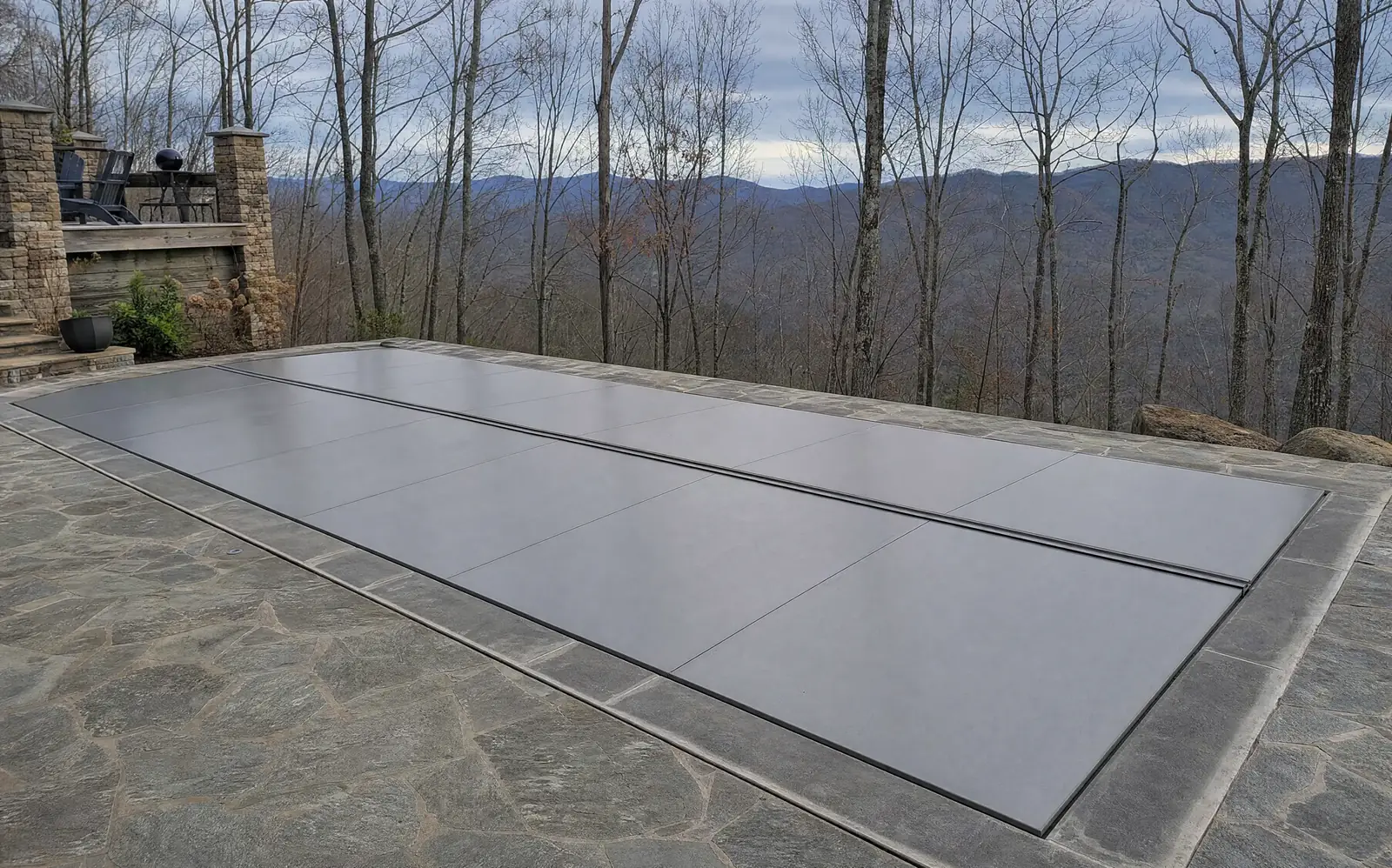
Pool covered for winter
One company, one quote

The grading, the pool, the decking, the lighting and the planting run as one project on one schedule, rather than five separate trades for you to coordinate.

We handle the permitting from application through final inspection, so you do not file anything and you do not chase an inspector.

See all services

What a cover does not do

A cover is not a barrier, and it does not replace the one your permit requires. A pool needs a barrier as part of the permit, and we plan it alongside the deck, sometimes using a retaining wall or the walls of the house to do part of the work.

Think of a safety cover as a second layer on top of the barrier. Both are worth having, and neither substitutes for the other.

Designing the cover in from the start

Three things have to be decided before the coping goes down. Whether you are having an automatic cover, where the housing sits, and how the track is carried in the surround.

Deciding at that point costs the price of the cover. Deciding afterward can mean lifting coping, reworking the surround, or discovering that a freeform shape will not take a straight track at all.

We go through the options with you at the design stage, alongside the heating, the lighting and everything else that is cheaper as an empty pipe than as a retrofit.

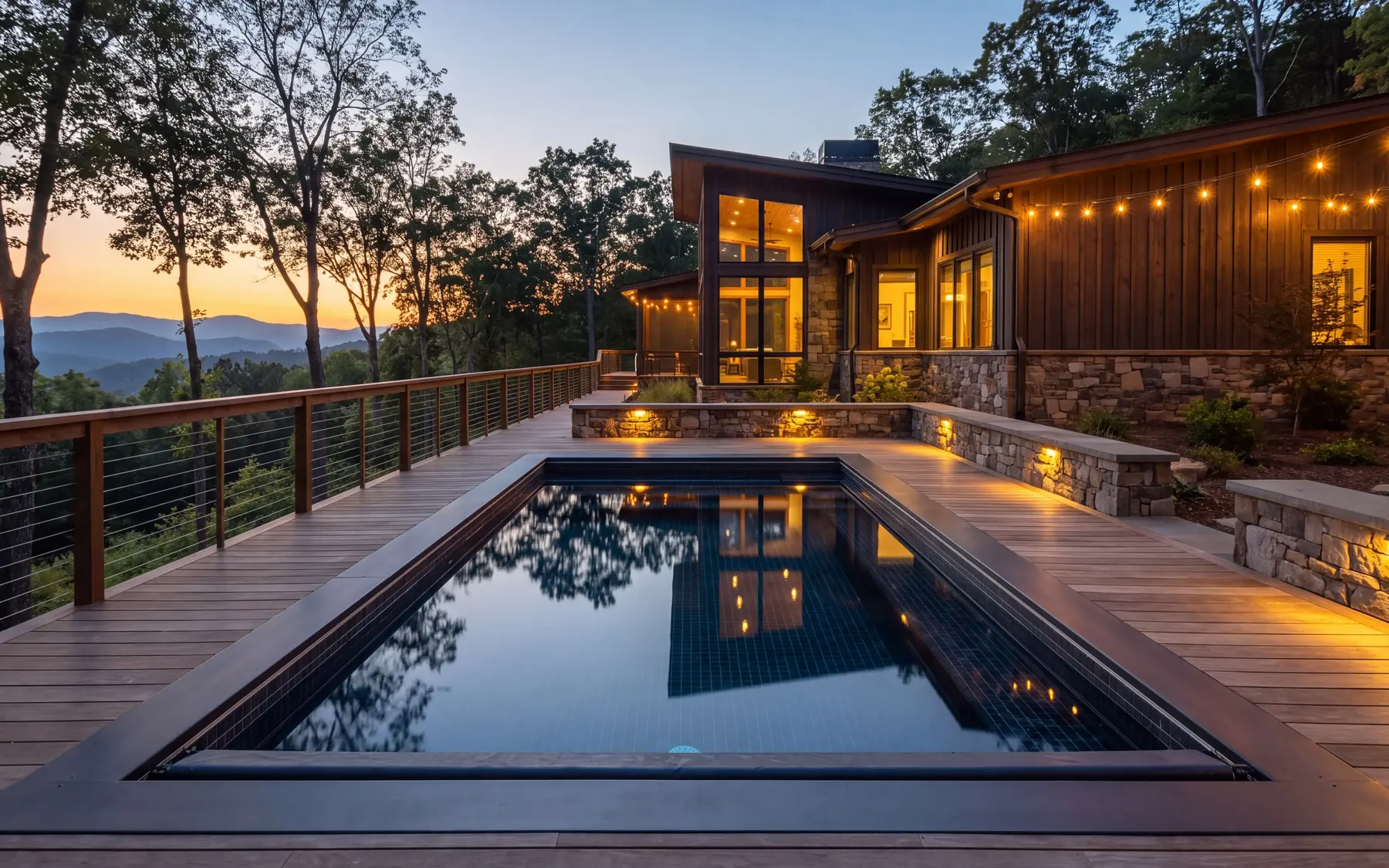
Pool set into a timber deck with landscape lighting at dusk
Built for mountain property

Three things decide a pool project in this region: the slope of your land, the ground underneath it, and how easily we can reach the backyard. Our recommendation follows your property rather than a catalog, which on mountain ground matters a great deal more than it does anywhere flat.

Talk to us about your backyard

What covers cost

An automatic cover is a real line on a pool quote, running into several thousand dollars once the track, the housing and the mechanism are counted. A mesh safety cover costs considerably less, and a solid winter cover less again.

All three are cheaper fitted with the pool than added later, because the coping and the surround are still open while the work is happening.

What drives the cost of a pool in this region

Talk to us about your pool

Tell us where you are and how you want to use the pool through the year. We will work through the cover options with you as part of the design, alongside the heating that goes with them.

Pool Covers in Asheville, NC FAQs

What does a pool cover actually do?

Three jobs, and around here all three matter. A cover holds heat in overnight, which is where a mountain pool loses most of it. A cover keeps leaves and debris out, which matters when your yard has hardwoods around it. And a properly specified safety cover carries weight, so nobody goes into the water by accident.

Which cover should I get?

An automatic cover if you want to use it daily without thinking about it, because a cover you have to wrestle with is a cover that stays open. A mesh safety cover if the priority is holding weight and getting through winter. Many properties here end up with an automatic cover for the season and a separate winter cover, and we would go through both with you at the design stage.

How does an automatic cover work?

An automatic cover runs on a track along both sides of the pool and closes in under a minute at the turn of a key or the press of a button. The mechanism and the track have to be designed in with the pool, because the tracks sit in the coping and the housing needs a place to live at one end.

Can an automatic cover be added to an existing pool?

Sometimes, and it depends on the shape of the pool and what the coping will take. A rectangular pool is far easier to retrofit than a freeform one, because the track has to run straight. Designing the cover in with the pool is considerably cheaper and it looks better, since the housing can be built into the surround instead of sitting on top of it.

Does a cover really save money on heating?

Most of the heat a pool loses goes off the water surface, so a cover holds in what you have already paid to put there. Running a heater on an uncovered pool at this elevation is the most expensive way to own one, because clear mountain nights draw heat out overnight faster than most people expect.

Is a pool cover the same as a pool fence?

No, and a cover does not replace the barrier your permit requires. A pool needs a barrier and it forms part of the permit, so we plan it with the deck. A safety cover is a second layer on top of that rather than a substitute for it. We handle the permitting from application through final inspection.

What is a mesh safety cover?

A mesh safety cover anchors into the deck and stretches tight across the pool, carrying weight and letting rain drain through while keeping leaves and debris out. Mesh covers are the usual answer for winter around here, and they come off and go back on seasonally.

How much does a pool cover cost?

An automatic cover is a real line on the quote, running into several thousand dollars once the track, the housing and the mechanism are counted. A mesh safety cover costs considerably less. Both are cheaper fitted with the pool than added later, because the coping and the surround are still open. See what drives pool cost in this region.

Do I still need a cover if I have a heater?

More than ever, because the two work together. A heater without a cover spends its night replacing heat that a cover would have kept. If the budget will only stretch to one of them this year, we would fit the cover first and talk about heating next season.

Get a Quote for Your Pool

Tell us where you are and what you are picturing. We will come out, measure what you have, and work through with you which pools suit your property and what each one would cost.

Call Now Free Quote